Puff-Puff: West and Central Africa's Favourite Fried Dough Balls
Golden, fluffy and slightly sweet, puff-puff is sold on street corners and served at every party. Ghana calls it bofrot, Cameroon calls it beignets. Here is its story.
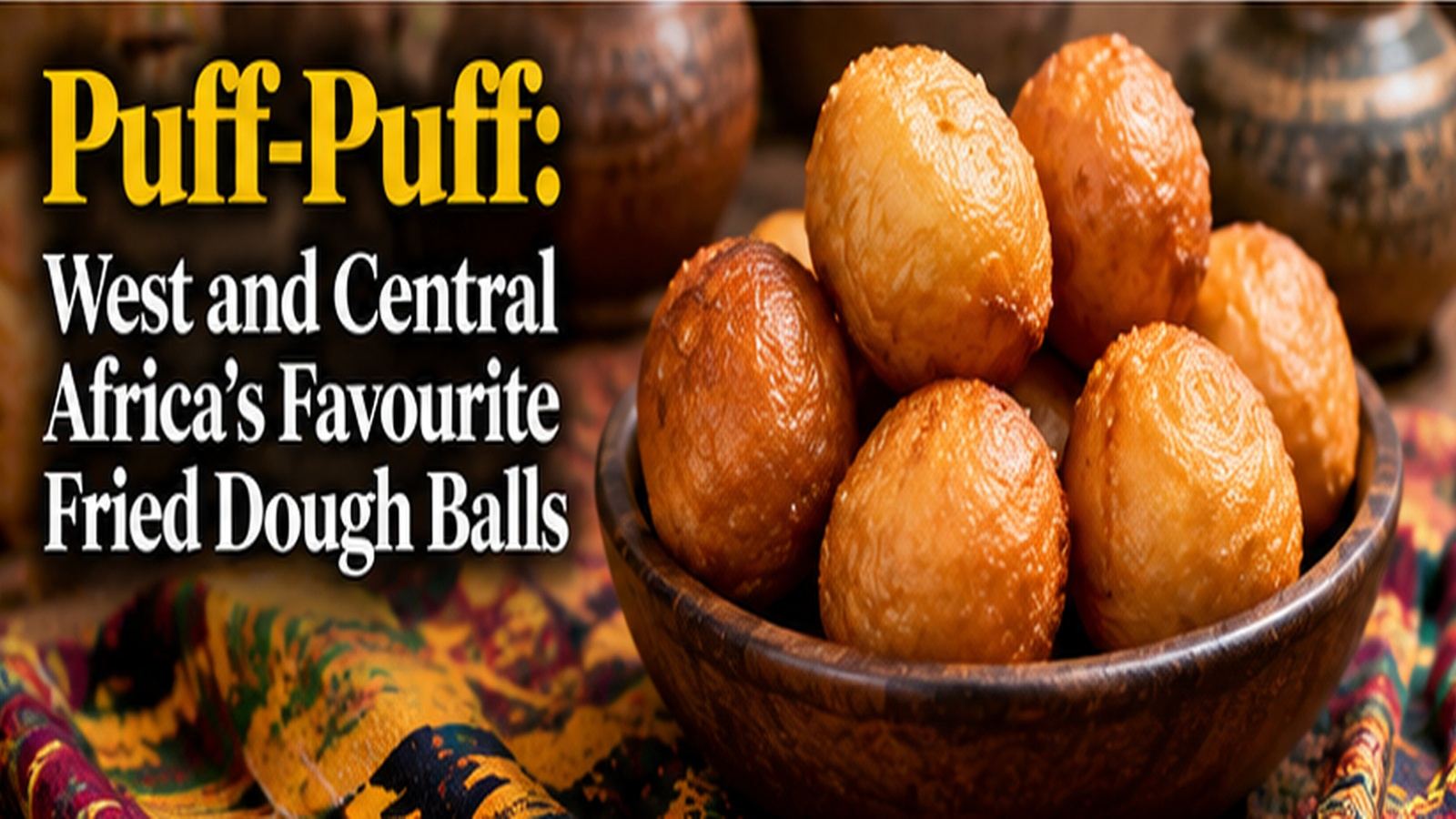
Walk past a busy bus stop in Lagos, Accra or Douala in the early evening and you will probably smell it before you see it: dough frying in a deep pot of hot oil. A seller scoops up a handful of batter, squeezes a ball through her fingers and drops it in. It sizzles, puffs up and rolls over on its own, turning golden brown. A minute later it lands in a paper bag, still hot.
This is puff-puff, one of the best-loved snacks in West and Central Africa. It is cheap, filling and almost impossible to eat just one of.
What puff-puff is
Puff-puff is a ball of sweet yeast dough, deep-fried until golden outside and soft and spongy inside. The basic ingredients are simple:
- plain flour;
- yeast;
- sugar and a pinch of salt;
- warm water;
- often a little nutmeg for flavour;
- oil for frying.
The batter is wetter than bread dough. After mixing, it is covered and left in a warm place to rise until it is bubbly and doubled in size. Then it is fried in small balls, traditionally shaped by squeezing batter out between the thumb and finger.
One snack, many names
Puff-puff is shared across many countries, each with its own name and twist:
- Nigeria: puff-puff, often sold with suya or as part of party "small chops";
- Ghana: bofrot or togbei, sometimes with a firmer texture;
- Cameroon: beignets, famously eaten for breakfast with beans and porridge;
- DR Congo: mikate;
- Liberia and Sierra Leone: also called puff-puff, and sometimes kala in Liberia.
On the East African coast, the similar but differently shaped mandazi plays the same role. Each country's version tastes a little different, depending on how much sugar, nutmeg or spice the cook adds.
Puff-puff versus buns
In Nigeria, puff-puff has a close rival: buns. Both are fried balls of dough, but the Lagos lifestyle site Pulse explains the differences well in its comparison of puff-puff and buns. Buns are made with eggs, butter or milk and baking powder, so they come out crunchy outside and dense inside. Puff-puff uses yeast and is light, airy and soft all the way through.
A street food and a party food
Puff-puff lives two lives.
On the street, it is a quick, cheap snack sold by vendors from big bowls covered with cloth. Office workers buy a bag on the way home; children spend their pocket money on a few warm balls after school. It sits alongside other street favourites such as Ghana's spicy fried plantain, kelewele, and the bean fritters known as akara.
At parties, puff-puff is a star of small chops, the platter of bite-sized snacks served at Nigerian weddings, birthdays and naming ceremonies, usually alongside spring rolls, samosas and grilled chicken. No celebration feels complete without it, just as no big Nigerian party is complete without a pot of jollof rice.
In Cameroon, beignets are central to a famous breakfast combination: beignets with spicy beans and a warm porridge, sold from roadside stalls in the morning.
Where puff-puff came from
Nobody knows exactly who first fried a ball of yeast dough in West Africa. Fried dough snacks are found all over the world, and wheat flour and baking yeast became widely available in West African towns during the colonial era and after, as imported flour spread through markets. Cooks adapted these ingredients to local tastes, adding nutmeg and frying in palm or vegetable oil, and puff-puff became a staple.
Whatever its origins, the snack has become thoroughly African. Recipes are passed down in families, and many people remember learning to shape the balls as children, standing beside a mother or aunt at the pot. Small puff-puff businesses also give many women a steady income, often run from home or a roadside table.
Tips for perfect puff-puff
- Let it rise fully. Under-proofed batter makes heavy, dense balls.
- Watch the oil temperature. If it is too hot, the outside burns before the inside cooks. If it is too cool, the balls soak up oil.
- Use your hand or a spoon to drop small, even balls so they cook at the same speed.
- Drain well on paper towels and serve warm.
Modern cooks experiment with fillings and toppings, from chocolate and cinnamon sugar to a spoonful of chilli in the batter for a savoury version. Some even serve puff-puff with dipping sauces, like doughnuts.
Why it matters
Puff-puff is a small snack with a big place in everyday life. It feeds commuters, delights children and makes every party feel like a party.
It also shows how food connects neighbours. Whether you call it puff-puff, bofrot, beignets or mikate, people from Lagos to Kinshasa share the same simple pleasure: a warm, golden ball of dough, fresh from the pot. It belongs on the same table as other West African favourites, from egusi soup to fufu.