Jollof Rice: The Real Story Behind West Africa's Favourite Rivalry
Nigeria and Ghana argue over who makes the best jollof, but the dish's name points to Senegal. Here is where jollof really comes from, and why everyone loves it.
Few things can start an argument across West Africa faster than a plate of jollof rice. Nigerians insist theirs is the best. Ghanaians are equally sure. Online, the "jollof wars" have produced endless memes, cook-offs and friendly insults. But ask where the dish actually began, and the trail leads somewhere else: Senegal.
What jollof is
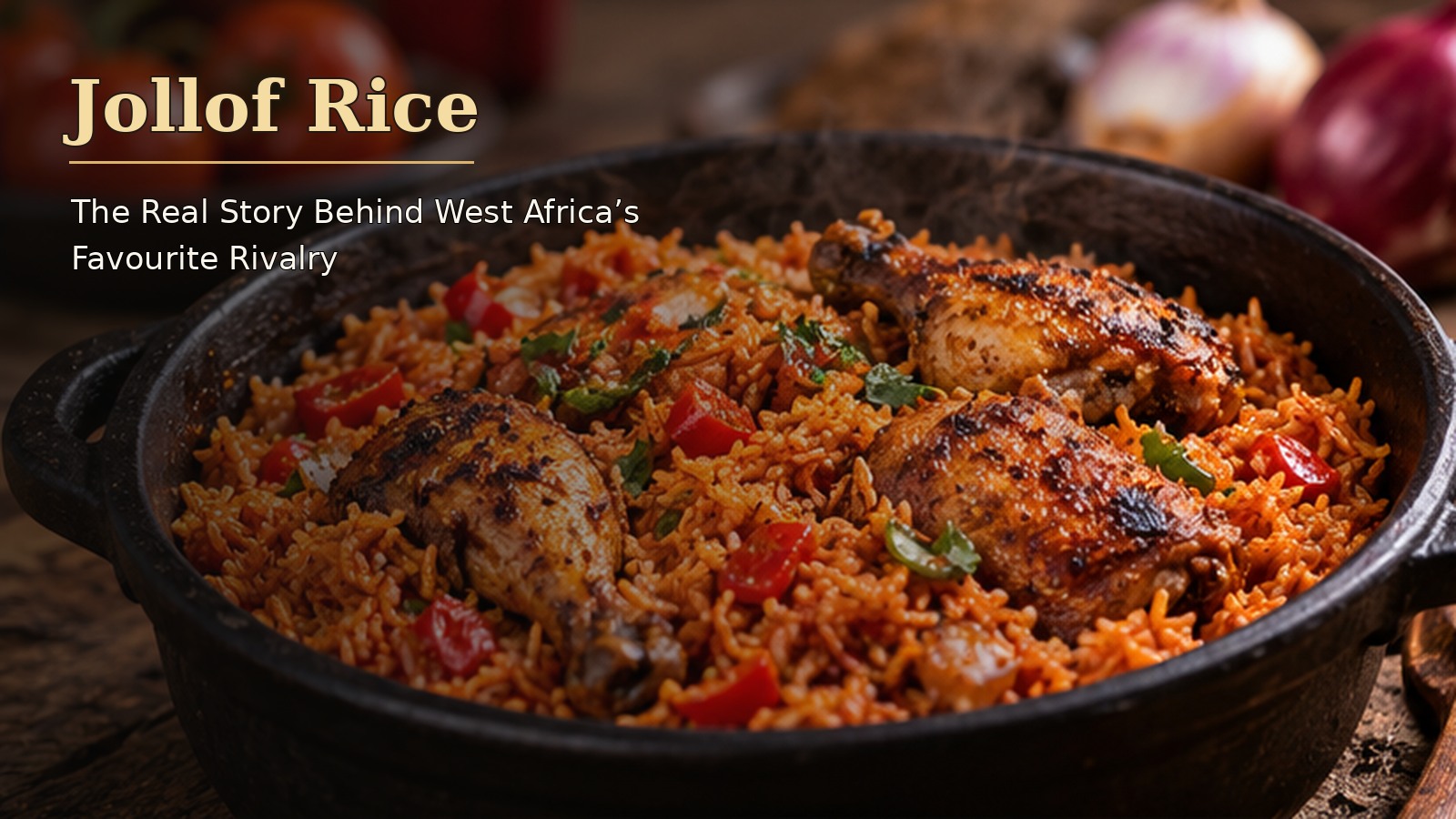
At its simplest, jollof is rice cooked in one pot with a rich sauce of tomatoes, onions, peppers and oil, seasoned with spices and stock. The rice absorbs the sauce as it cooks, turning red-orange and full of flavour. It is served with chicken, beef, fish or vegetables, and often fried plantain.
Every country — and every family — has its own version. And the slightly smoky, crispy layer at the bottom of the pot, prized by many cooks, is a delicacy in its own right.
The Senegalese roots
The name "jollof" comes from Jolof (also spelled Djolof or Wolof), a state of the Wolof people that once ruled much of what is now Senegal. The dish most often identified as jollof's ancestor is ceebu jën (also written thieboudienne), which in Wolof means "rice and fish."
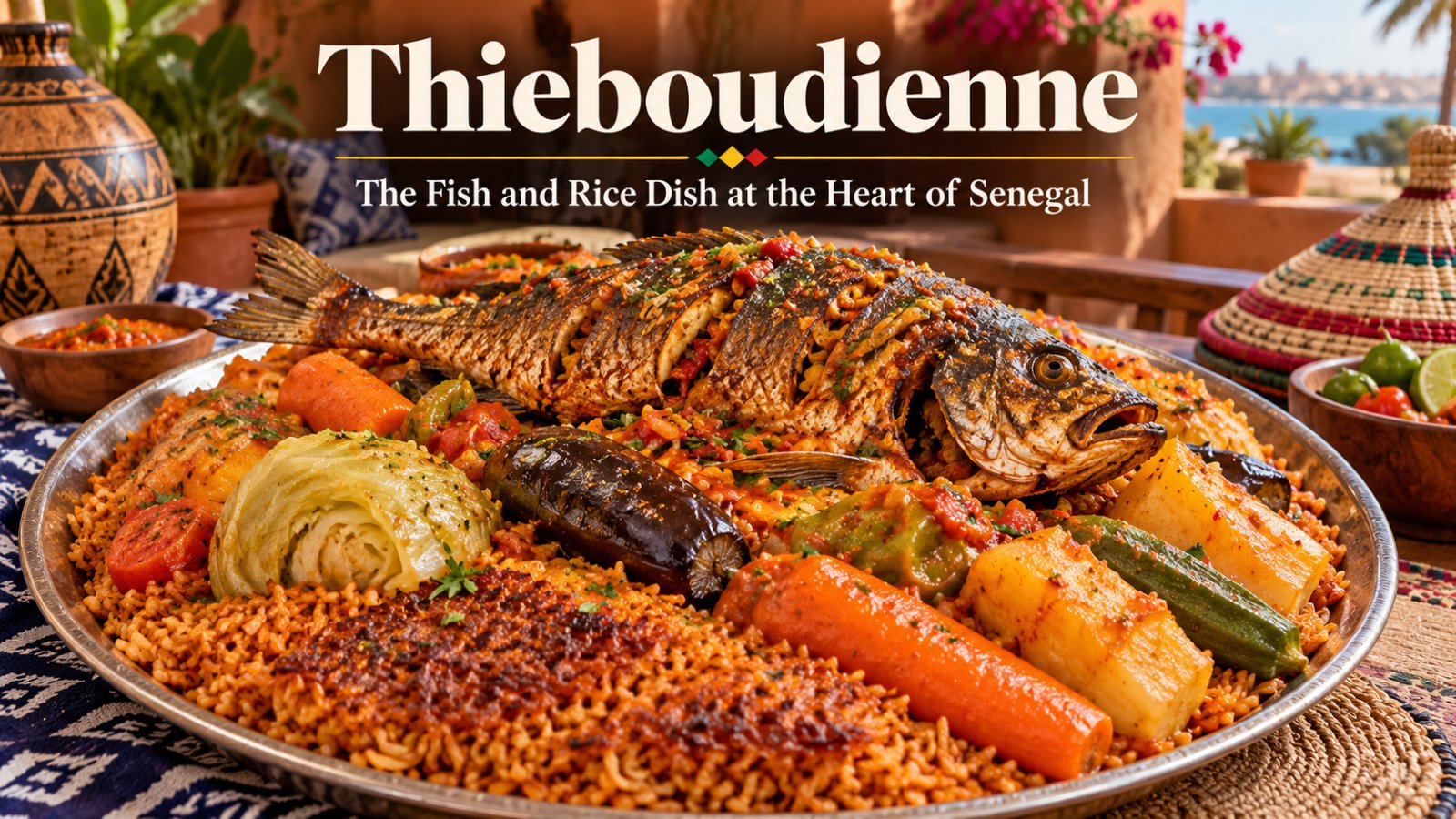
Ceebu jën is the national dish of Senegal: rice cooked in a tomato-based sauce, with fish — often stuffed with a parsley and garlic paste — and vegetables such as cassava, carrot, cabbage and aubergine. Senegalese tradition credits its creation to cooks in Saint-Louis, the old colonial capital in the north. One famous name is a cook called Penda Mbaye, although historians say little is documented about her and she has become something of a legend.
In December 2021, UNESCO added ceebu jën to its list of the Intangible Cultural Heritage of Humanity. Many people saw it as settling at least part of the jollof debate.
Rice, colonialism and a changing diet
Rice has been grown in West Africa for thousands of years — the region even has its own domesticated species, African rice (Oryza glaberrima), originally from the inland Niger Delta. But the dish that became ceebu jën also has a colonial story. During French rule, colonial policies pushed farmers in Senegal to grow peanuts for export, while cheap broken rice was imported from French Indochina. Broken rice became a staple in Senegalese cities, and cooks created dishes around it.
How jollof spread
From Senegal and the Gambia, the idea of one-pot tomato rice travelled along trade routes and with migrants, workers and soldiers. Each region adapted it:
- Nigerian jollof is typically made with long-grain parboiled rice, a strong pepper and tomato base, curry powder and thyme, and is often cooked until a smoky "party jollof" flavour develops over firewood.
- Ghanaian jollof often uses fragrant jasmine or basmati rice and may include more spices, such as ginger and garlic, sometimes with mixed vegetables.
- Senegalese and Gambian versions, including benachin ("one pot" in Wolof) in the Gambia, stay closer to the original rice-and-fish or rice-and-meat combinations.
- Liberia, Sierra Leone, Cameroon and others have versions of their own.
The jollof wars
The rivalry between Nigeria and Ghana is mostly good fun. It plays out at cook-offs, on social media and in diaspora communities from London to Houston. Senegalese food lovers sometimes watch with amusement, pointing out that the dish carries the name of their own history.
Why it matters
Jollof is a dish that tells a story about West Africa itself: a shared culture, spread across borders by trade and migration, then made local in a hundred ways. It is a food of celebration — no wedding, birthday or naming ceremony in much of the region is complete without it — just as few gatherings in Ethiopia happen without the coffee ceremony. And whichever version you think is best, the argument is part of the pleasure. As any West African host will tell you: just have another plate.
Further reading
- The Conversation — Who invented jollof rice? Senegal beats Ghana and Nigeria to the title
- UNESCO — Ceebu jën, a culinary art of Senegal (2021)
- Fran Osseo-Asare, Food Culture in Sub-Saharan Africa (Greenwood, 2005)