Shakshuka: North Africa's Eggs in Spicy Tomato Sauce
Eggs poached in a bubbling pan of tomatoes, peppers and harissa. Shakshuka, or chakchouka, is a Tunisian favourite with a long, debated history and many local versions.
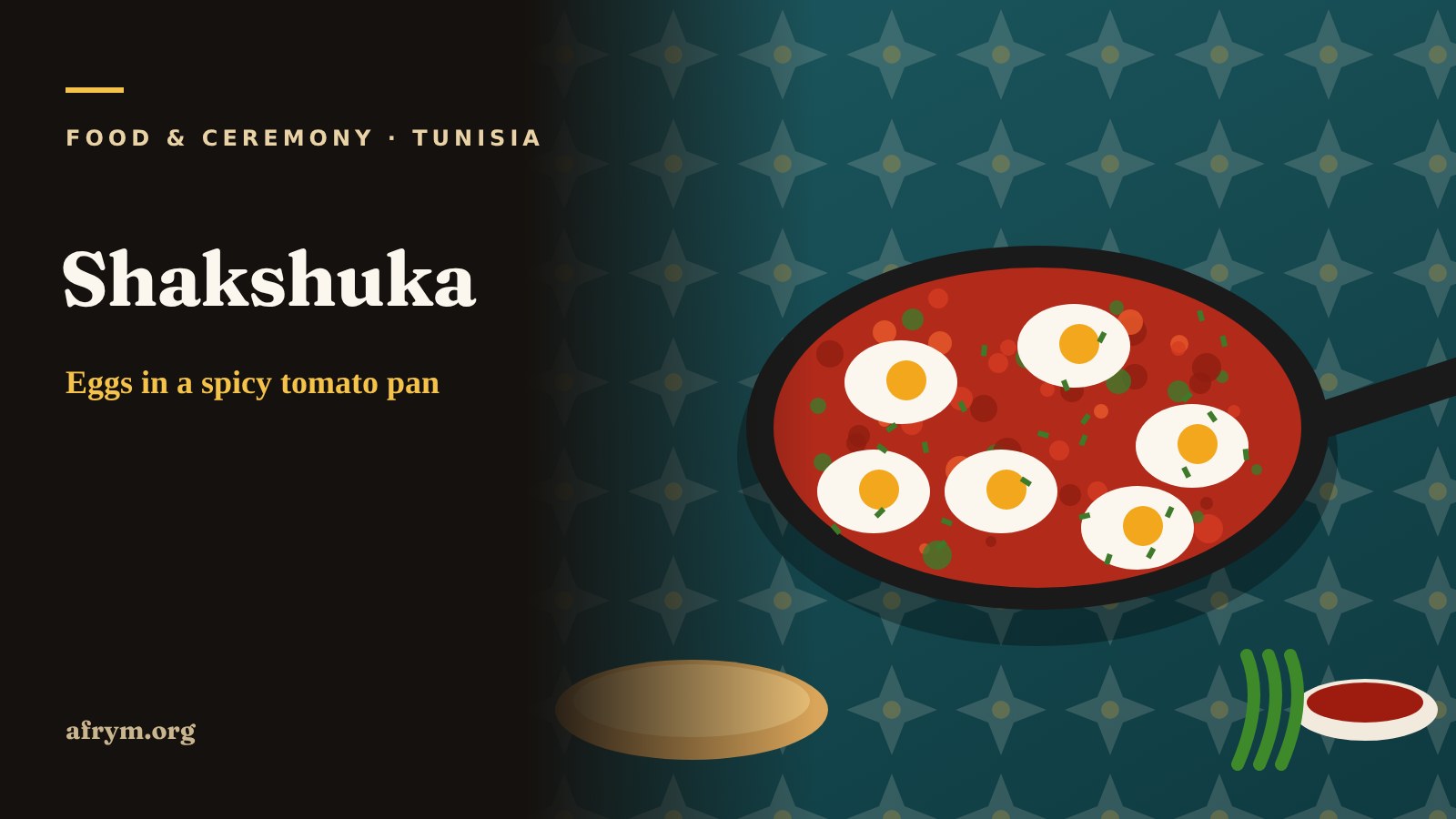
A heavy pan sits on the stove. Onions soften in olive oil, then sweet peppers and garlic join them, followed by tomatoes and a spoonful of fiery red paste. When the sauce is thick and bubbling, the cook makes small hollows with a spoon and cracks an egg into each one. A lid goes on for a few minutes, and the meal is ready: bright red sauce, white and golden eggs, and a basket of bread to scoop it all up.
This is shakshuka, spelled chakchouka in Tunisia and Algeria. It is one of North Africa's best-loved dishes, eaten for breakfast, lunch or a late supper, and in recent years it has become a café favourite around the world.
What's in the pan
The basic recipe is simple and flexible:
- Olive oil and onions as the base;
- Peppers, sweet, hot or both;
- Tomatoes, fresh in summer or tinned in winter;
- Garlic and spices such as cumin, caraway or paprika;
- Harissa, the Tunisian chilli paste, for heat;
- Eggs, poached right in the sauce.
It is usually served straight from the pan with crusty bread or flatbread for dipping, a style of eating shared with dishes like Egypt's ful medames.
What the name means
The word is usually linked to an idea of mixing or shaking things together, which suits a dish made by stirring whatever vegetables are at hand in one pan. Some food writers connect it with a Turkish dish of a similar name, şakşuka, which is a mixture of fried vegetables, but the exact history of the word, like that of the dish, is still debated.
A New World dish with deep roots
Shakshuka feels ancient, but two of its main ingredients are newcomers. Tomatoes and chilli peppers came from the Americas and reached the Mediterranean only after the 1500s. They spread across North Africa and the Ottoman world over the following centuries, slowly finding their way into local kitchens. The same journey brought chillies to Mozambique's peri-peri sauce and maize to East Africa's ugali.
Before tomatoes, cooks across the region already made stews of vegetables, oil and spices, sometimes finished with eggs. Once tomatoes and peppers arrived, those dishes took on the red colour and sweet heat that define shakshuka today.
Many people consider Tunisia the dish's true home, and it is certainly where chakchouka is most woven into everyday life. But Libya, Algeria and Morocco all have their own versions, and each country claims its style is the original.
Harissa: the heat at the heart
Tunisian shakshuka gets its kick from harissa, a paste of dried red chillies, garlic, olive oil and spices such as caraway and coriander. In many Tunisian homes, harissa is still made by hand, with chillies dried in the sun and ground at the end of summer.
In 2022, UNESCO recognised Tunisian harissa as part of the world's intangible cultural heritage, honouring not just the paste but the knowledge, skills and family gatherings that surround its making. You can read the UNESCO listing for harissa for more about these traditions.
Many versions
Shakshuka changes from kitchen to kitchen and season to season:
- In Tunisia, cooks may add potatoes, courgettes, broad beans or artichoke hearts, and sometimes slices of spicy merguez sausage.
- In Algeria, chakchouka is often a thick stew of peppers and tomatoes, with or without eggs.
- In Morocco, a similar dish can be cooked in a clay tagine and seasoned with cumin and paprika.
- In Libya, versions with dried meat or extra chilli are popular.
Outside Africa, Jewish families from Tunisia, Libya, Morocco and Algeria carried the dish with them when they emigrated in the twentieth century, and it became a staple in Israel. From there and from North African communities in France, it spread to brunch menus across Europe and America.
How it fits into North African meals
In North Africa, shakshuka is home food rather than restaurant food. It is cheap, filling and quick, a dish for students, busy parents and anyone with a few eggs and vegetables. During Ramadan it may appear at the evening meal, and it is a common choice for a simple supper.
It sits comfortably alongside the region's other great dishes, from slow-cooked couscous and sweet-savoury pastilla to Egypt's street favourite koshari.
Tips for cooking it
- Cook the peppers and onions slowly so they turn soft and sweet.
- Let the sauce reduce until it is thick; a watery sauce makes it hard to poach the eggs.
- Add harissa a little at a time and taste as you go.
- Take the pan off the heat while the yolks are still soft, as they keep cooking.
Why it matters
Shakshuka tells a story of exchange: tomatoes and chillies from the Americas, Ottoman cooking traditions, Tunisian harissa and the journeys of North African families across the Mediterranean. Yet in the end, it is a humble one-pan meal made with what is at hand.
That combination of history and simplicity is why it has travelled so far. Wherever it is cooked, it still carries the warmth of a North African kitchen.