Ndolé: Cameroon's National Dish of Bitterleaf, Peanuts and Shrimp
Bitter greens tamed into a creamy peanut stew: ndolé is Cameroon's celebration dish. Discover where it comes from, how it is made and what to eat with it.
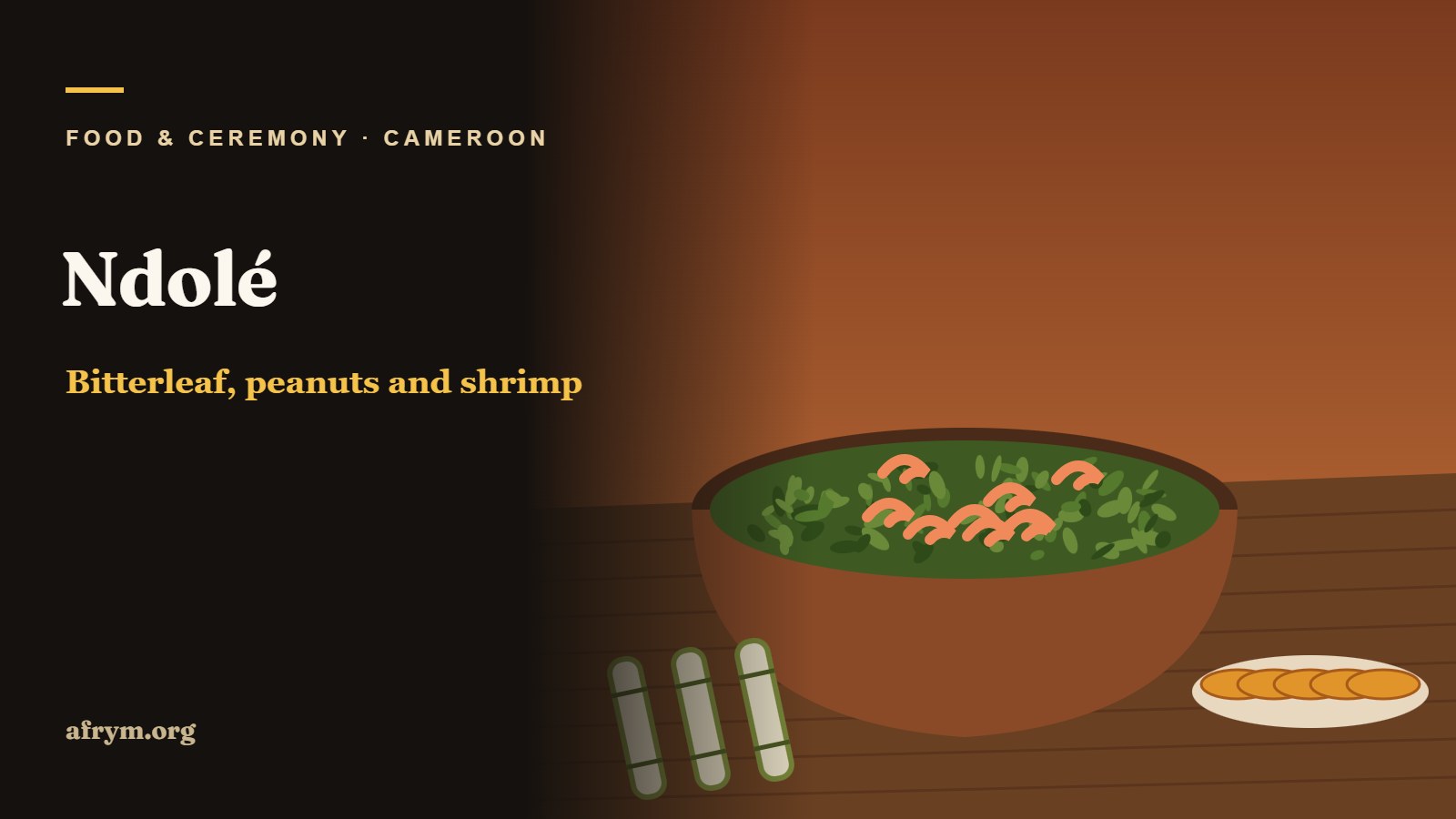
Quick answer: Ndolé is a stew of bitterleaf, ground peanuts and meat, fish or shrimp, widely seen as Cameroon's national dish. It comes from the Duala people of the coastal Littoral Region around Douala, and it is usually eaten with fried plantains or fermented cassava sticks called bobolo and miondo.
There is a particular kind of excitement in a Cameroonian home when someone announces that ndolé is on the menu. It means a special day. It means hours of washing leaves, grinding nuts and simmering a big pot. And it means that, very soon, there will be a deep green, creamy stew on the table, topped with glistening shrimp or tender beef.
A dish from the coast
Ndolé belongs first of all to the Duala people of Cameroon's Littoral Region, around the port city of Douala, and to the coastal Sawa communities. From there it travelled across the country and then around the world with Cameroonians abroad.
That journey is remarkable in a country of such variety. With hundreds of languages and many distinct regional kitchens, Cameroon is often called "Africa in miniature". Yet ndolé has become a dish that people from many regions proudly call their own, in the same way that jollof rice brings West Africans together.
Meet the bitter leaf
The name ndolé comes from the plant at the centre of the dish: bitterleaf, or Vernonia amygdalina, a shrub that grows across tropical Africa. Raw, its leaves are so bitter that few people would eat them.
Bitterleaf turns up in kitchens across the region. Igbo cooks in Nigeria use it for ofe onugbu, bitterleaf soup, and many people value it in traditional medicine. In Cameroon, cooks soften its bite through patient work:
- Rubbing and washing the leaves vigorously by hand.
- Boiling them, sometimes more than once.
- Squeezing and rinsing again until just a gentle bitterness remains.
Busy families today often buy leaves already washed, frozen or dried. Many grandmothers will tell you, though, that hand-prepared leaves taste better.
What goes into the pot
Every family has its own recipe, but a classic ndolé brings together:
- Prepared bitterleaf, chopped;
- Peanuts, usually raw groundnuts, boiled and ground into a smooth paste;
- Onions, garlic and ginger, often blended together;
- Meat, fish or seafood: beef, smoked fish, dried crayfish or fresh prawns, sometimes all at once;
- Oil, often heated with sliced onions and poured over the top at the end.
The peanut paste cooks slowly with stock and aromatics until it thickens. Then the leaves and the meat or seafood go in. Some cooks also add ground melon seeds. The result is creamy and savoury, with a slight bitter edge that keeps every mouthful interesting.
What to serve with it
Ndolé is almost never eaten on its own. Favourite partners include:
- Fried ripe plantains, whose sweetness balances the bitter greens;
- Bobolo and miondo, sticks of fermented cassava dough wrapped in leaves and steamed;
- Boiled yams, rice or boiled plantains.
Cassava staples like these are loved across Central and West Africa, from fufu to Côte d'Ivoire's attiéké.
A stew for life's big moments
Because it takes time, skill and plenty of ingredients, ndolé is food for occasions: weddings, funerals, christenings, end-of-year parties and big Sunday lunches. For many Cameroonians living abroad, its smell is the smell of home, and Cameroonian restaurants from Paris to Houston often list it as a signature dish. Africa.com offers a short introduction to ndolé as Cameroon's national dish.
Tips if you cook it at home
- Buy washed bitterleaf if you can find it at an African grocery shop. Fresh leaves need time.
- Start with raw peanuts. Boiled and ground, they give the soft, creamy texture cooks look for.
- Add shrimp late. Seafood turns tough if it cooks too long.
- Finish with fried onions in hot oil, spooned over just before serving.
Part of a family of leafy stews
Ndolé sits within a large African tradition of greens cooked with ground seeds or nuts. Nigeria's egusi soup uses melon seeds, West Africa's mafé is built on peanut sauce, and Central Africa's moambe chicken cooks in palm nut sauce. Each shows cooks turning local plants into rich, comforting meals.
Frequently asked questions
What is ndolé made of?
Mainly bitterleaf, ground peanuts, onions and garlic, cooked with meat, fish or shrimp and finished with oil.
Where does ndolé come from?
It comes from the Duala people of Cameroon's coastal Littoral Region, around Douala, and is now eaten all over the country.
What do you eat with ndolé?
Fried ripe plantains, bobolo or miondo (fermented cassava sticks), boiled yams, plantains or rice.
Is ndolé bitter?
Only slightly. Washing and boiling the leaves removes most of the bitterness, and the peanut sauce softens what remains.
Why it matters
Ndolé captures the patience and skill of African home cooking. It takes a leaf too bitter to eat and, through care and time, turns it into the dish served on the most important days of life. In a country of many peoples and languages, this green stew from the coast has become something almost everyone shares.
Further reading
- Africa.com — Ndolé: Cameroon's national dish
- Keng's Kitchen — Bitter leaf, the star ingredient in Cameroon's national dish
- Remitly — Cameroonian ndolé
- Fran Osseo-Asare, Food Culture in Sub-Saharan Africa (Greenwood Press, 2005)