Egusi Soup: The Melon-Seed Stew That Feeds West Africa
Ground melon seeds, palm oil, leafy greens and smoked fish come together in egusi, one of Nigeria's best-loved soups. Here is what it is and how it is made.
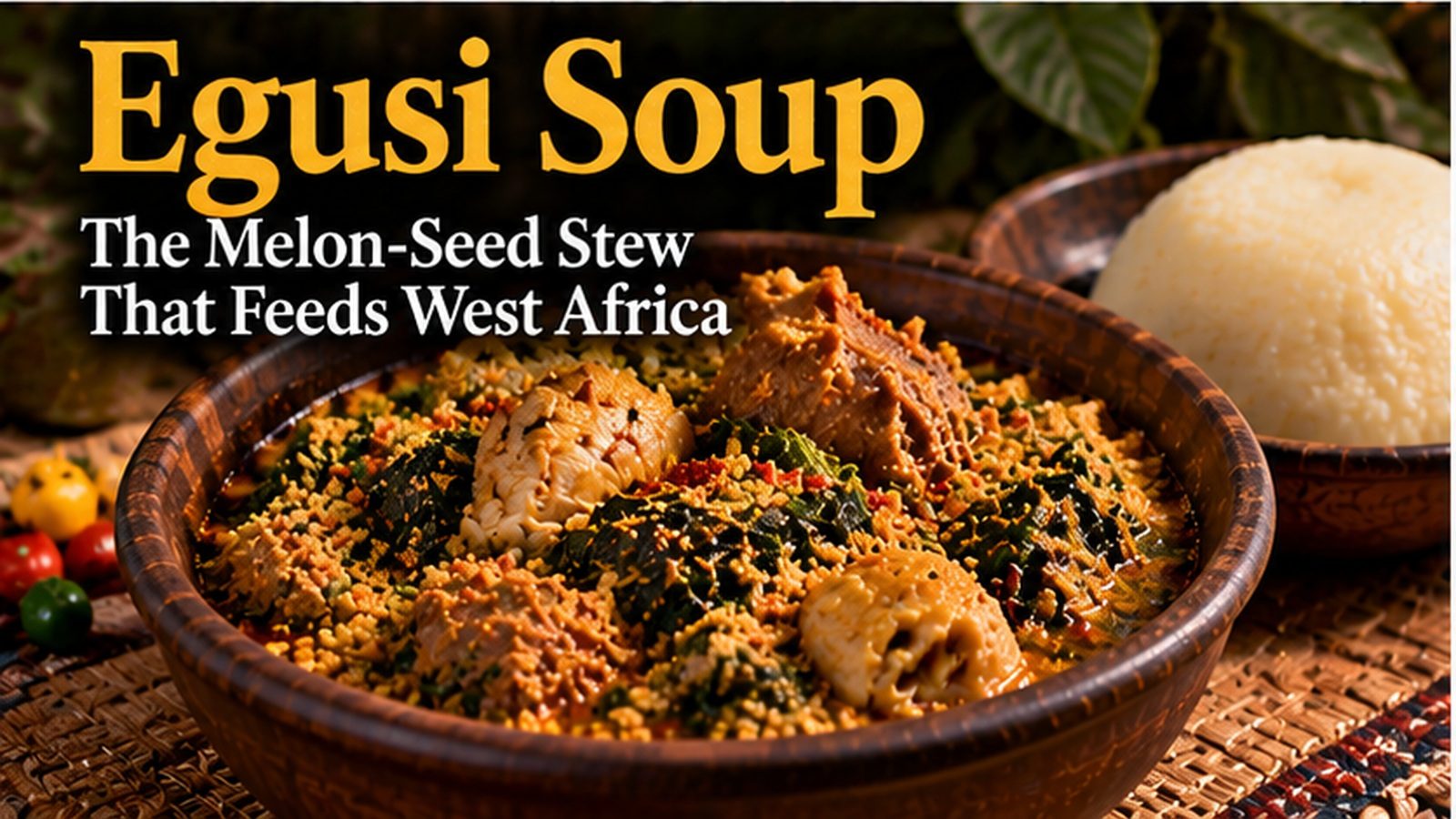
In a Nigerian kitchen, a pot of palm oil heats until it turns a deep orange. Onions and peppers go in, then a pale, crumbly powder that soon begins to clump into soft curds, like scrambled eggs. Stock, smoked fish and meat follow, and finally a handful of chopped green leaves. Twenty minutes later, the pot holds a thick, rich, golden-green stew. This is egusi soup, one of the most popular dishes in Nigeria and across West Africa.
What is egusi?
Egusi is the name for the seeds of certain melons and gourds grown in West Africa. The plants look like watermelons, but their fruit is bitter and not eaten; it is grown for its seeds. The seeds are dried, shelled and ground into a pale, oily powder that thickens soups and adds a nutty flavour and plenty of protein.
Egusi is grown and eaten across the region, from Nigeria and Cameroon to Ghana, where a similar ingredient is known as agushi and used in stews and in palaver sauce.
Making the soup
Every family and region has its own way of making egusi, but most versions include:
- Ground egusi seeds — the base of the soup.
- Palm oil — giving colour and flavour.
- Peppers and onions — often scotch bonnet or other hot peppers.
- Protein — beef, goat, chicken, tripe, cow skin (ponmo), smoked or dried fish, stockfish and crayfish.
- Leafy greens — such as bitter leaf, fluted pumpkin leaves (ugu), spinach or waterleaf.
- Seasoning — salt, stock cubes, and sometimes locust bean (iru or ogiri) for a deep, funky flavour.
There are two main styles of cooking the egusi:
- Fried — the ground seeds are fried in palm oil until they form little lumps, giving a textured soup.
- Boiled or "paste" — the egusi is mixed with water or blended with onions into a paste and dropped into the simmering soup, where it forms soft clumps.
Cooks argue happily about which method is best.
Eaten with a "swallow"
Egusi is almost never eaten on its own. It is served with a "swallow" — a soft, dough-like staple eaten by hand:
- Pounded yam — the classic partner, especially for celebrations.
- Eba — made from gari (fermented cassava granules) stirred into hot water.
- Fufu or amala — made from cassava or yam flour.
You pinch off a piece of swallow, shape it with your fingers, dip it into the egusi and swallow it, as described in our story on fufu.
Different peoples, different egusi
Egusi is beloved by many Nigerian peoples, each with its own twist. Yoruba cooks often prepare a version called efo elegusi, with plenty of leafy vegetables. Igbo cooks might use bitter leaf or ugu. In the south-south, it may be cooked with seafood. Across the diaspora, Nigerian restaurants in London, Houston and Johannesburg serve egusi as a taste of home.
A soup for every occasion
Egusi is everyday food, cooked at home in large pots that last several days. It is also festive: it appears at weddings, naming ceremonies, birthdays and Christmas, often alongside jollof rice. Mothers teach daughters (and increasingly sons) to make it, and many Nigerians judge a cook by their egusi.
Why it matters
Egusi shows how West African cooking turns humble local ingredients — seeds of a bitter melon, palm oil, leaves from the garden — into something rich and celebratory. It is filling, nutritious and deeply comforting, and for millions of people it tastes like home.
Further reading
- Food and Agriculture Organization (FAO) — Traditional food plants resources
- Ozoz Sokoh, Kitchen Butterfly — Nigerian food writing
- Fran Osseo-Asare, Food Culture in Sub-Saharan Africa (Greenwood, 2005)