Igue Festival: How the Benin Kingdom Ends the Year
Every December, the Oba of Benin leads weeks of royal rites, sword dances and blessings. The Igue festival gives thanks, purifies the kingdom and welcomes a new year.
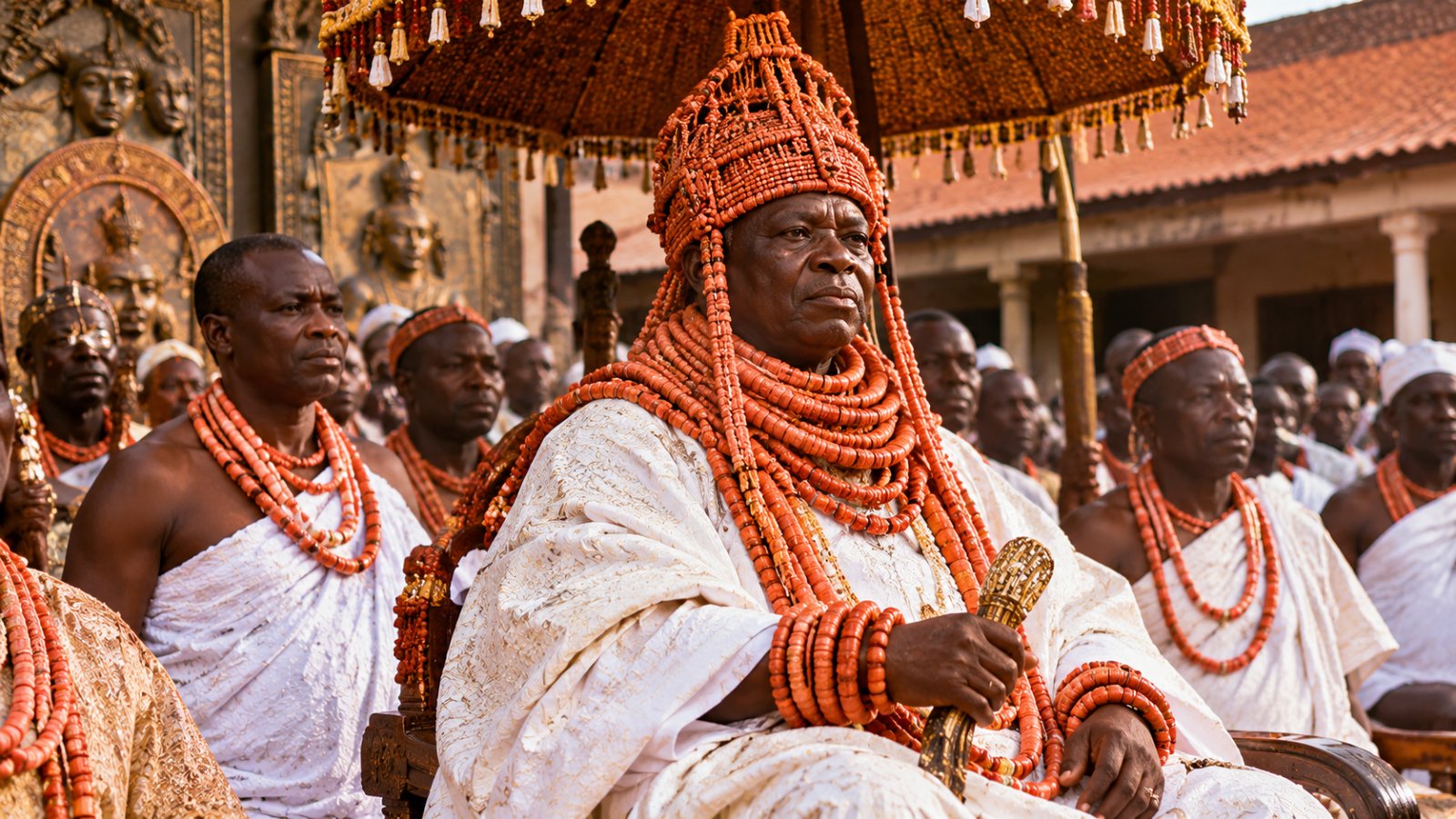
In December, the mood in Benin City changes. Funerals are put on hold. Chiefs in red cloth and coral beads gather at the royal palace. Drums sound, ceremonial swords flash in the air, and in the final days of the season, young people carry bundles of green leaves from house to house, bringing blessings for the year to come.
This is Igue, the great year-end festival of the Benin Kingdom in Edo State, southern Nigeria. Led by the Oba of Benin, it is a time of thanksgiving, purification and renewal for the Oba, his people and the whole kingdom.
A kingdom with a long memory
The Benin Kingdom is one of Africa's oldest surviving monarchies. Its capital was once ringed by the vast earthworks described in our story on the walls of Benin City, and its royal artists created the famous Benin Bronzes, many of which were taken by British forces in 1897.
The Oba remains the spiritual and cultural centre of Edo life today. The current ruler, Oba Ewuare II, came to the throne in 2016. Igue is one of the most important moments in his calendar.
Where the festival came from
Edo tradition links the festival in its present form to Oba Ewuare the Great, who ruled in the fifteenth century and is remembered as one of Benin's most powerful kings. He is said to have promised a festival of thanksgiving after winning back the throne, and Igue grew from that vow. Some historians trace older thanksgiving rites back even further, to the early Ogiso rulers.
Like many royal histories, these accounts come down through oral tradition, so details differ from one teller to another. What everyone agrees on is that Igue is very old and deeply tied to the kingship.
Blessing the head
At the centre of Igue is the idea of the head. In Edo belief, the head is the seat of a person's destiny, good fortune and judgement. During Igue, the Oba performs rites to strengthen and purify his own head, which stands for the wellbeing of the whole kingdom.
Families and individuals perform their own Igue at home too, giving thanks for the year that is ending and asking for protection and success in the next. Offerings may include kola nuts, food and drink shared with relatives and neighbours, a reminder of the role of the kola nut in hospitality and ritual across West Africa.
A season of ceremonies
Igue is not a single day but a series of events spread across December, announced each year by the palace. A recent programme included:
- Homage to the Oba, when chiefs gather at the palace to greet the king;
- Ugie Erha Oba, honouring the Oba's royal ancestors, with processions and dances carrying the eben, a flat ceremonial sword;
- Igue Oba, the king's own private rite of purification;
- ceremonies for palace officials, chiefs and the royal princes and princesses;
- Igue Edohia, a day when Edo people perform rites in their own homes;
- Ugie Ewere, the joyful close of the season.
During much of this time, the palace asks people not to hold funerals or burial celebrations. The pause is meant to keep the season focused on life, thanksgiving and renewal.
Ewere: the leaves of blessing
The festival ends with Ugie Ewere. Young people go out to gather Ewere leaves, which symbolise peace, good health and victory. They bring them to the palace and then to homes, shops and markets across the city, singing and offering good wishes.
People tuck the leaves above doors, in cars and in shops for luck in the new year. Each year the Oba also prays publicly for Edo State and for Nigeria as a whole, and Nigerian news outlets regularly report his Ewere prayers for the people.
Visiting during Igue
Many of Igue's rites are private, and some are only for the royal family, chiefs or palace officials. But visitors can still feel the festive atmosphere in Benin City in December, especially around the palace on the days set aside for public ceremonies. As always with sacred events, it is best to go with a local guide, dress respectfully and ask before taking photographs.
December is a busy month across Nigeria, with Christmas celebrations and the homecoming crowds of Detty December. Igue gives the season in Edo State its own distinctive rhythm.
How Igue compares
Igue belongs to a family of royal and community festivals in southern Nigeria and beyond. Like the New Yam Festival, it gives thanks at a turning point of the year. Like Lagos's Eyo festival, it brings colour and ritual to the streets of a historic city. And like the Osun-Osogbo festival, it blends public celebration with private devotion.
Why it matters
Igue shows how an ancient kingdom keeps its traditions alive in a modern city. Through a calendar of rites, a whole community pauses to give thanks, settle its spirit and look ahead together.
When the Ewere leaves appear above doorways at the end of December, they carry a simple message: the year is ending well, and the new one is welcomed with hope.
Further reading
- Prime Business Africa — Igue Festival: Spiritual heartbeat of the Benin Kingdom
- Nigerian Tribune — Oba of Benin announces 2024 Igue festival, bans burial activities
- Gazette Nigeria — Oba of Benin performs Ewere rite for natives, Nigerians
- Paula Girshick Ben-Amos, The Art of Benin (British Museum Press, 1995)