Incwala: Eswatini's Sacred Kingship and First Fruits Ceremony
Timed by the moon around the summer solstice, Incwala is Eswatini's most sacred ceremony, when the king tastes the first fruits and the nation is renewed.
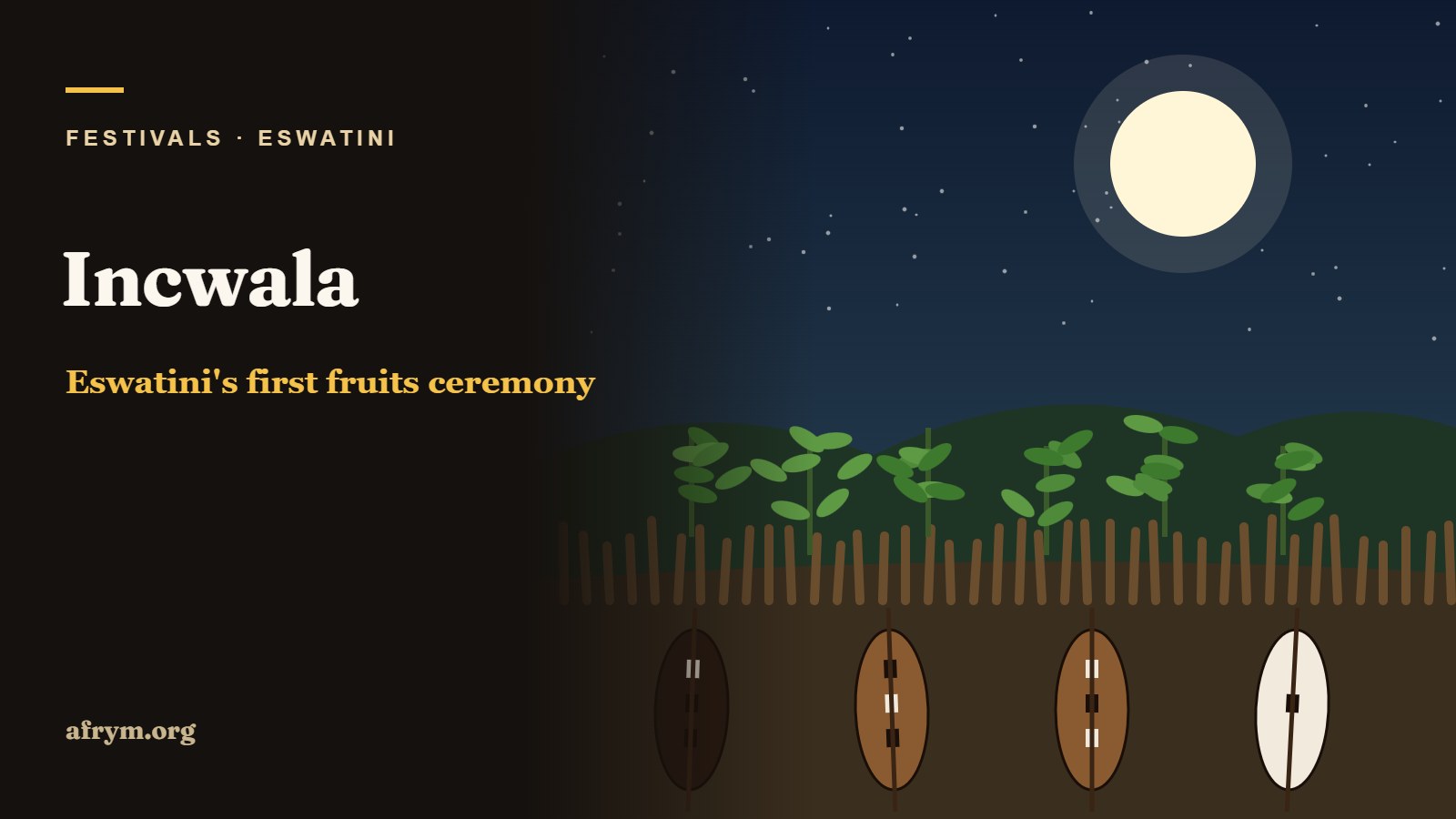
Quick answer: Incwala is the most sacred national ceremony of the Kingdom of Eswatini. Held each year around the summer solstice and timed by the moon, it renews the kingship and the nation. Its best-known moment comes when the king tastes the first fruits of the new harvest, after which everyone else may eat them. The main day usually falls in late December or early January.
On a summer night in Eswatini, a column of young men sets off walking. They will go on through the dark, under a full moon, for around 50 kilometres. When they reach their destination they will cut branches from a special shrub and carry them back to the king. Meanwhile, at the royal residence, regiments in traditional dress are singing songs that are heard at no other time of year.
This is part of Incwala, a ceremony that has been at the heart of Swazi life for centuries.
A kingdom built around its king
Eswatini, called Swaziland until 2018, is a small country between South Africa and Mozambique. It is one of the few places in the world where a monarch still holds great political and cultural authority. The king is called Ingwenyama, "the Lion", and he rules alongside the Queen Mother, Indlovukazi, "the Great She-Elephant".
Incwala exists because of this kingship. It is a ceremony of cleansing and renewal. The king is spiritually strengthened, the nation gathers around him, the old year is ended and a new one begins. The anthropologist Hilda Kuper, who studied Swazi society in the 1930s, made Incwala a central part of her classic study of Swazi kingship.
Dates set by the sky
You will not find a fixed Incwala date on a calendar. The timing depends on the moon and the summer solstice, and royal advisers who keep this knowledge announce the dates shortly beforehand. The main public day falls around the full moon nearest the longest day of the year, usually in late December or early January.
The whole ceremony lasts several weeks, in two main stages.
Little Incwala: the water journey
It starts with the bemanti, "the people of the water". The king sends them on long journeys to gather water from important rivers and from the Indian Ocean, along with other sacred materials. When they return, about two weeks later, the Little Incwala (Incwala Lencane) begins. Regiments gather at the royal residence, and the special Incwala songs and dances are performed for the first time that season.
Big Incwala: six days of ritual
Around two weeks later comes the Big Incwala (Incwala Lenkhulu), lasting about six days.
- The night march. Unmarried young men walk through the night, under the full moon, for around 50 km to cut branches of the lusekwane shrub. Only those judged pure may take part.
- The king's sanctuary. The branches are carried to the royal cattle byre at Ludzidzini, near Lobamba, and woven into the inhlambelo, a private enclosure for the king.
- Preparation. More branches are added, and the king receives traditional medicines from his advisers.
- The main day. In the great public climax, the king and his regiments dance in full war dress, and the king ritually tastes the new season's crops. Only then may the nation eat from its own new harvest. This day is a national public holiday.
- A quiet day. The nation rests and reflects, with limits on work and noisy celebration.
- The fire. Regiments bring firewood, and objects from the old year are burned in a great fire in the cattle byre, closing one year and opening the next.
The look of Incwala
The regiments' dress is a powerful sight: cowhide, feathers, animal skins and beadwork, in styles that echo the regalia of neighbouring Nguni peoples, whose craft we explored in our story on Zulu beadwork. Thousands of people take part in the main day each year.
Visiting respectfully
Swazi people from across the country join the public parts of the ceremony, and visitors may watch some of them. But Incwala is a sacred ritual, not a performance for tourists. Some parts are private, photography is restricted at certain times, and visitors are expected to dress modestly and follow instructions.
Each year the government shares updates as the ceremony unfolds, such as its notice on the start of the annual Incwala.
Incwala and the reed dance
Incwala is often paired in people's minds with Eswatini's other great national event, the Umhlanga reed dance, held in late winter. Umhlanga centres on young women and the Queen Mother, Incwala on the king and the male regiments. Between them, they mark the rhythm of the Swazi year.
Like every living tradition, Incwala also has its debates. Some churches have questioned parts of the ritual, while others take part in royal events without seeing any conflict. For many Swazi people it remains the strongest expression of national identity and unity.
First fruits across Africa
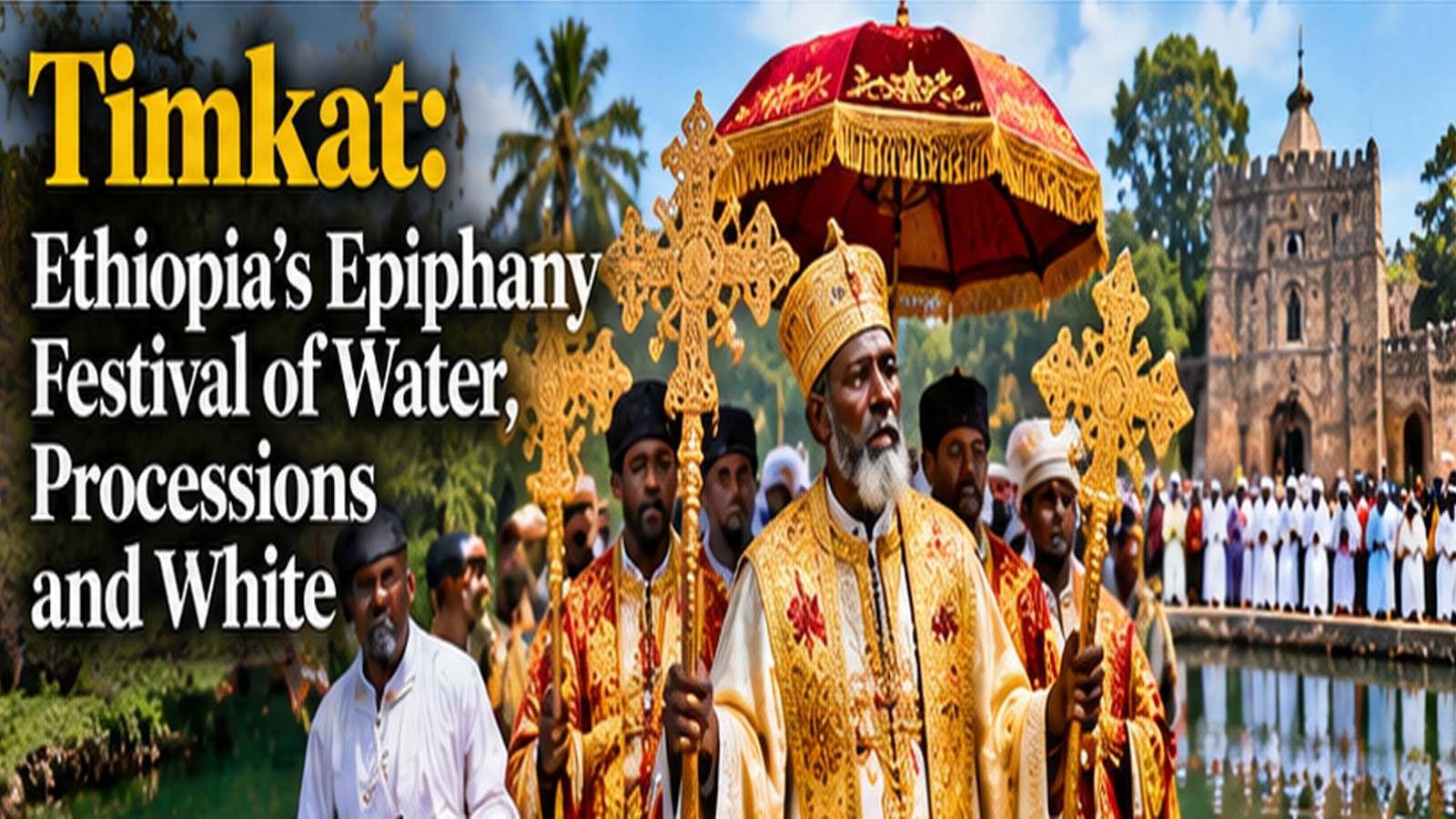
Blessing the harvest before anyone eats it is an idea found across the continent. In Ghana, the Homowo festival marks the harvest with a special meal, and the Igbo New Yam Festival holds back the eating of new yams until the first fruits are offered. Ghana's Odwira festival also cleanses and renews the nation, while Ethiopia's Timkat, like Incwala, places sacred water at the centre of renewal.
Frequently asked questions
What is the Incwala ceremony?
It is Eswatini's most sacred annual ceremony, centred on the kingship, the renewal of the nation and the blessing of the new harvest.
When is Incwala held?
Its dates follow the moon and the summer solstice. The main day usually falls in late December or early January and is a public holiday in Eswatini.
What happens on the main day of Incwala?
The king and the regiments dance in full traditional dress, and the king tastes the first fruits of the new harvest, allowing the nation to eat them.
Can tourists attend Incwala?
Visitors may watch some public parts, but they must respect the ceremony's rules, including limits on photography and areas that are private.
Why it matters
Incwala is one of Africa's best-known royal ceremonies that is still performed in full today. Through song, dance, water, branches and fire, and by following the moon itself, a nation gathers each year to remember who it is. When the king tastes the first fruits and the closing fire burns, Eswatini begins again.
Further reading
- Government of Eswatini — The annual Incwala ceremony begins
- Religion Unplugged — Christianity blends with tradition in Africa's last absolute monarchy
- Office Holidays — Incwala Day in Eswatini
- Hilda Kuper, An African Aristocracy: Rank Among the Swazi (Oxford University Press for the International African Institute, 1947)