Habesha Kemis: Ethiopia's Handwoven White Dress and Its Tibeb Borders
Soft white cotton, woven by hand and edged with bright tibeb borders. The habesha kemis is the dress Ethiopian women wear for holidays, weddings and church.
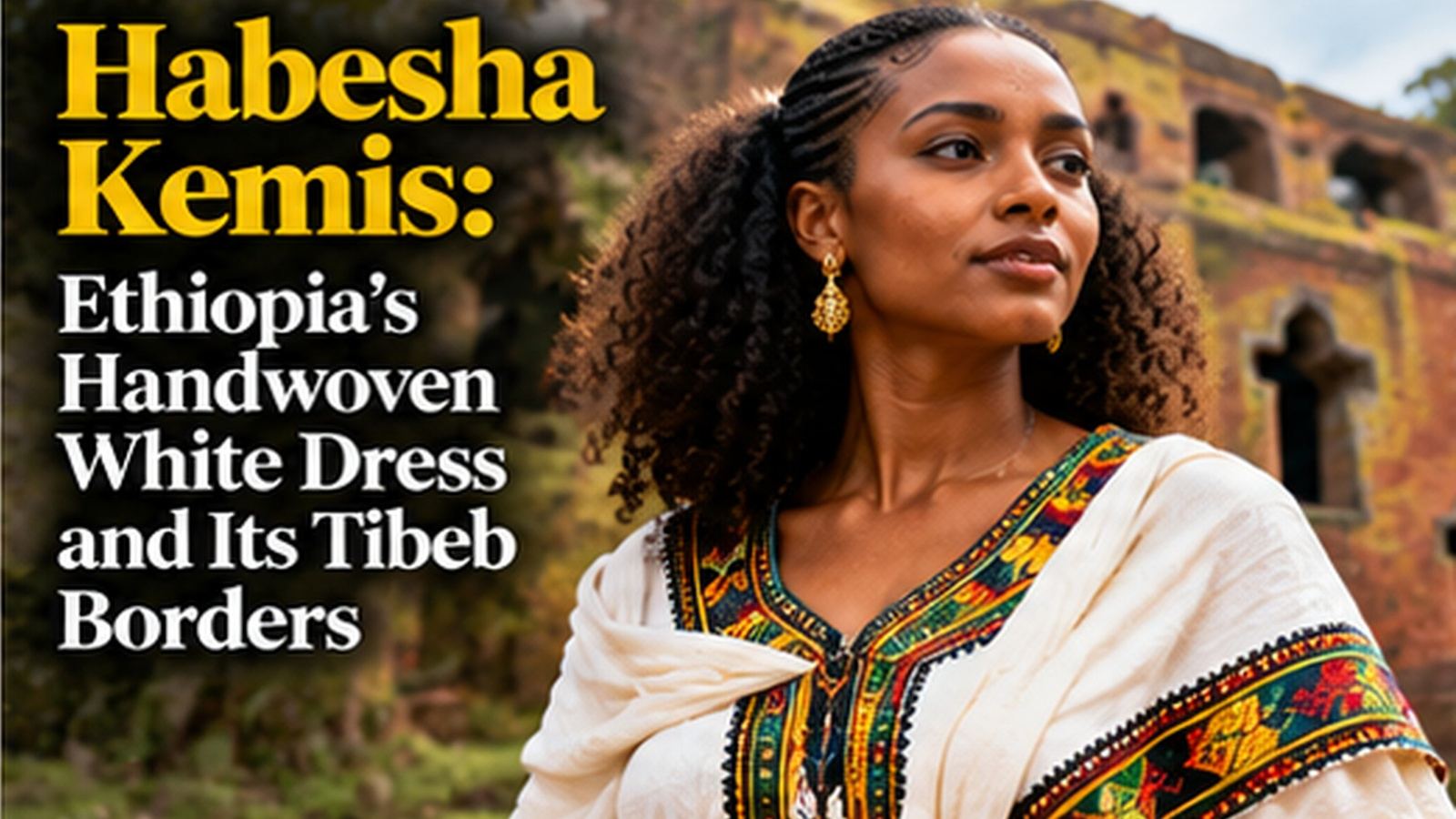
On the morning of a big holiday in Addis Ababa, the streets turn white. Women and girls walk to church in long, flowing dresses of soft cotton, their hems and necklines bright with woven bands of colour. Light shawls are draped over shoulders and heads. Men wear white too, and the whole city seems to shine.
The dress is the habesha kemis, the traditional women's dress of Ethiopia and Eritrea. It is one of the most recognisable outfits in Africa, and one of the most loved.
What the dress is
Kemis simply means "dress", and habesha is a word long used for the peoples of the Ethiopian and Eritrean highlands. The classic habesha kemis is:
- ankle-length, usually with long sleeves;
- made of handwoven cotton, white or off-white, light and slightly sheer;
- decorated with tibeb, colourful woven borders running along the hem, the front, the cuffs and the neck.
It is usually worn with a netela, a thin cotton shawl that also carries a tibeb border, or with a heavier wrap in cooler weather. The outfit is cool in the sun and warm enough for highland mornings.
Tibeb: the woven borders
The most eye-catching part of the dress is the tibeb. These are not printed or painted on. Weavers create them with extra coloured threads woven into the cloth as it grows on the loom, building up crosses, diamonds, zigzags and floral patterns.
According to research by the textile scholar Jannes Waples Gibson, the brightly coloured tibeb familiar today is a fairly recent addition to a much older tradition of white cotton clothing. It became popular around the time of Emperor Menelik II, who made Addis Ababa his capital at the end of the nineteenth century. Before then, the borders of fine cotton cloth worn by the nobility were often a single red band. The paper on the art of the tibeb weavers of Addis Ababa traces how the style grew.
Patterns often carry meaning. Crosses and church motifs connect the dress to Ethiopian Orthodox Christianity, an ancient faith whose art you can also see in Ethiopian crosses and icon paintings.
From cotton to cloth
Making a habesha kemis is slow, skilled work, and it usually passes through several hands:
- Spinning. Cotton is cleaned and spun into fine thread, traditionally by women using a drop spindle.
- Weaving. A weaver, called a shemane, weaves the cloth on a wooden pit loom or treadle loom, adding the tibeb as the cloth grows.
- Sewing. A tailor cuts and stitches the cloth into a dress, sometimes adding embroidery.
Ethiopian news reports say a single handmade dress can take around three weeks to make. Weavers from the Dorze people of southern Ethiopia, many of whom settled in the Shiro Meda area of Addis Ababa, became especially famous for their skill. Shiro Meda remains the city's best-known market for traditional clothing.
Hand weaving like this belongs to a long African tradition, from Ghana's kente to Mali's bogolanfini mud cloth.
When it is worn
The habesha kemis is above all a dress for special days. Demand peaks before the great festivals of the Ethiopian church year:
- Timket (Epiphany) in January, when the streets fill with white-clad crowds;
- Genna (Christmas) and Fasika (Easter);
- Meskel, the Finding of the True Cross, in September;
- the New Year, Enkutatash, which falls at the start of the Ethiopian calendar.
It is also the outfit of choice for weddings, baptisms and church on Sundays. Brides often wear richly decorated versions, and families may dress in matching colours. At a traditional coffee ceremony on a holiday, the hostess often wears one too.
Regional styles and modern designs
Different regions and communities have their own styles. Tigrayan and Eritrean dresses, for example, are known for particular border patterns and for being worn with distinctive braided hairstyles and jewellery.
Today, designers in Addis Ababa and in the diaspora are reinventing the dress, adding gold and silver thread, bold colours, new cuts and even modern sleeves, while keeping the hand-woven tibeb at its heart. Ethiopian women in the United States, Europe and the Middle East wear the habesha kemis at weddings and holidays, often ordering it from weavers back home.
Real versus factory-made
As demand has grown, cheaper factory-made copies have appeared, often made of synthetic fabrics with printed or machine-made borders. Sellers in Addis Ababa warn that these imitations feel heavier and less breathable than handwoven cotton. A genuine dress costs much more, but buyers say the softness and lasting quality are worth it, and every purchase supports a weaver's family.
Why it matters
The habesha kemis shows how a garment can carry an entire culture: the faith and festivals of the highlands, the skill of spinners and weavers, and the pride of women who wear it on their most important days.
When the streets of Ethiopia turn white at Timket, every dress is a small piece of living craft, and a reminder that some of Africa's finest art is meant to be worn.
Further reading
- The Reporter Ethiopia — Habesha Kemis: The age-old holiday attire
- Jannes Waples Gibson, "TIBEB, Art of the Weaver in Addis Ababa Today", Textile Society of America Symposium, 1998
- Richard Pankhurst, Economic History of Ethiopia, 1800–1935 (Haile Sellassie I University Press, 1968)