Pilau: The Spiced Rice of the Swahili Coast
Fragrant with cumin, cardamom, cinnamon and cloves, pilau is the festive rice of East Africa's Swahili coast. Its spices tell a story of the Indian Ocean trade.
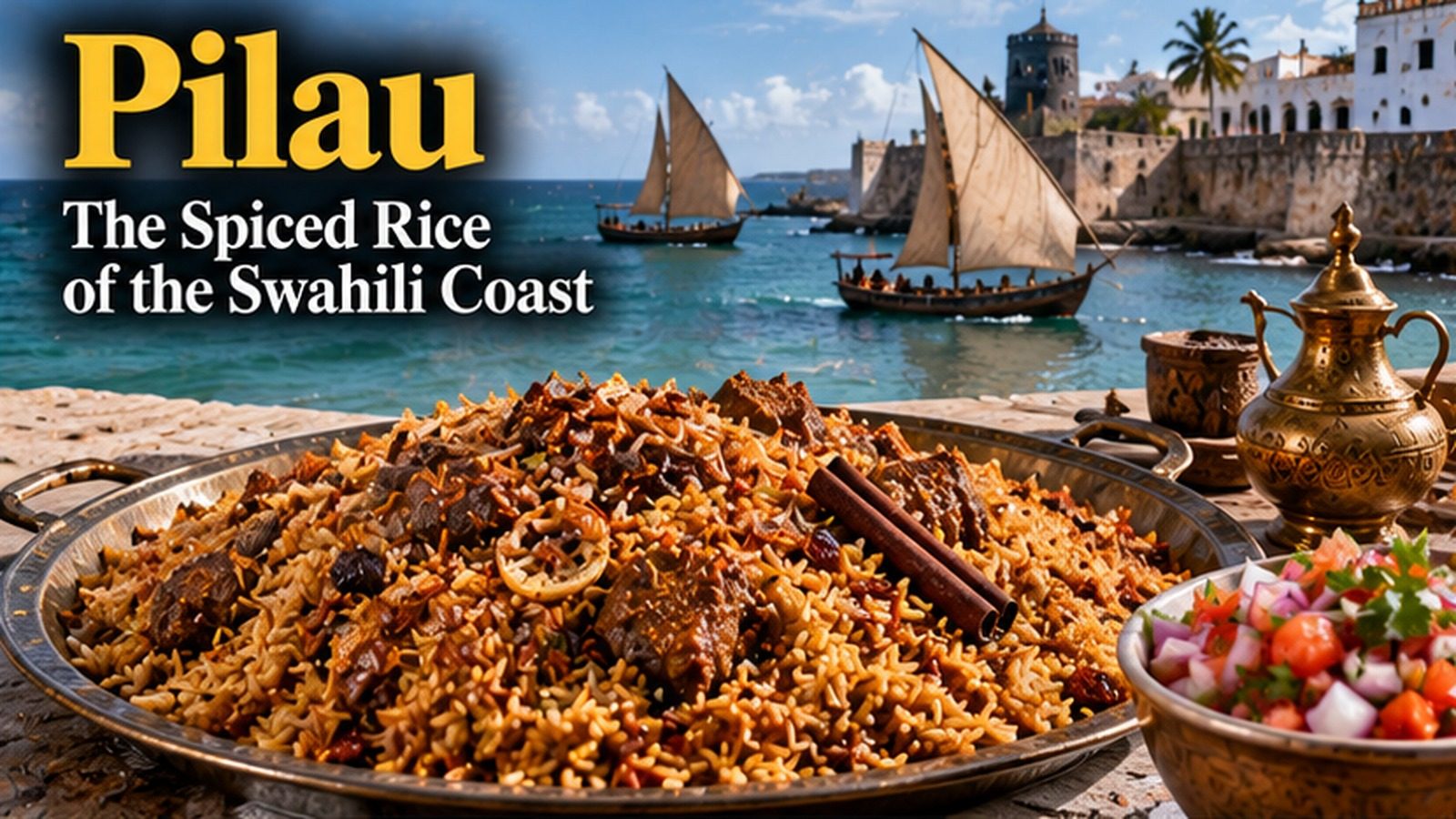
At a wedding in Mombasa, a celebration in Zanzibar or an Eid feast in Dar es Salaam, one dish is almost certain to appear: huge trays of brown, fragrant rice, studded with tender pieces of meat and potato, glistening with oil and smelling of warm spices. This is pilau, the festive rice of the Swahili coast — and every spoonful carries a little of the Indian Ocean's history.
A dish that crossed the ocean
The name pilau comes from the same family of words as the Persian polow, the Turkish pilav and the English pilaf — dishes of rice cooked in stock with spices. Rice dishes of this kind spread across the Middle East, Central Asia and India, and reached the East African coast with the traders, sailors and settlers who crossed the Indian Ocean for centuries on the seasonal monsoon winds.
On the Swahili coast — from Somalia through Kenya and Tanzania to Mozambique — pilau became a local dish, cooked with East African ingredients and techniques.
The spice mix
The heart of Swahili pilau is its spice blend, known as pilau masala. A typical mix includes:
- Cumin seeds
- Cardamom pods
- Cinnamon sticks
- Cloves
- Black peppercorns
The spices are often toasted whole and ground, or added whole to the pot. They give pilau its brown colour and its warm, aromatic flavour, without making it very hot.
Several of these spices have a special connection to the coast. Cloves became the great crop of Zanzibar and Pemba in the 19th century, when Omani rulers established vast clove plantations, worked largely by enslaved labour. For a time, Zanzibar was the world's leading producer of cloves, and it is still known as the "Spice Island."
How it is made
Recipes vary from family to family, but a classic Swahili pilau is made like this:
- Onions are fried slowly in oil until deep brown — this gives much of the colour.
- Garlic, ginger and the spices are added and fried until fragrant.
- Meat — usually beef, goat, chicken or sometimes fish — is browned, and potatoes may be added.
- Rice is stirred in, then stock or water, and the pot is covered and cooked gently until the rice has absorbed all the liquid.
The result is fluffy, aromatic rice, each grain coated in flavour.
What goes with it
Pilau is usually served with kachumbari, a fresh salad of chopped tomatoes, onions, chilli and coriander, sometimes with lime. The cool, sharp salad balances the warm spices. In Kenya, a cold soda is the classic drink at a pilau feast; on the coast, a glass of fresh juice or spiced tea.
Pilau and biryani
On the Swahili coast you will also find biryani, a related dish introduced by Indian and other communities, in which rice and a spiced meat sauce are cooked separately and then layered. Pilau is the everyday favourite; biryani is often reserved for special occasions.
A food for celebrations
Pilau is the dish of gatherings. It is cooked in huge pots for weddings, Eid, funerals, Christmas and community events, often over open fires by groups of cooks. In Kenya, pilau has spread far beyond the coast and is a festive favourite across the country.
Coastal communities' festivals, such as Zanzibar's Mwaka Kogwa, are often celebrated with large shared meals in which pilau has a place of honour.
Why it matters
Pilau shows how the Swahili coast absorbed influences from across the ocean and made them its own. The rice came from Asia, the spices from India and the islands, the cooking traditions from Persia and Arabia — and the result is a dish that is unmistakably East African, served at every important moment of life.
Further reading
- Abdul Sheriff, Slaves, Spices and Ivory in Zanzibar (James Currey, 1987)
- Abdul Sheriff, Dhow Cultures of the Indian Ocean (Hurst, 2010)
- UNESCO World Heritage Centre — Stone Town of Zanzibar