Tagine: The Cone-Shaped Pot at the Heart of Moroccan Cooking
A tagine is both a clay pot with a tall pointed lid and the slow-cooked stew made in it. Here is how the pot works, what goes in it, and where it comes from.
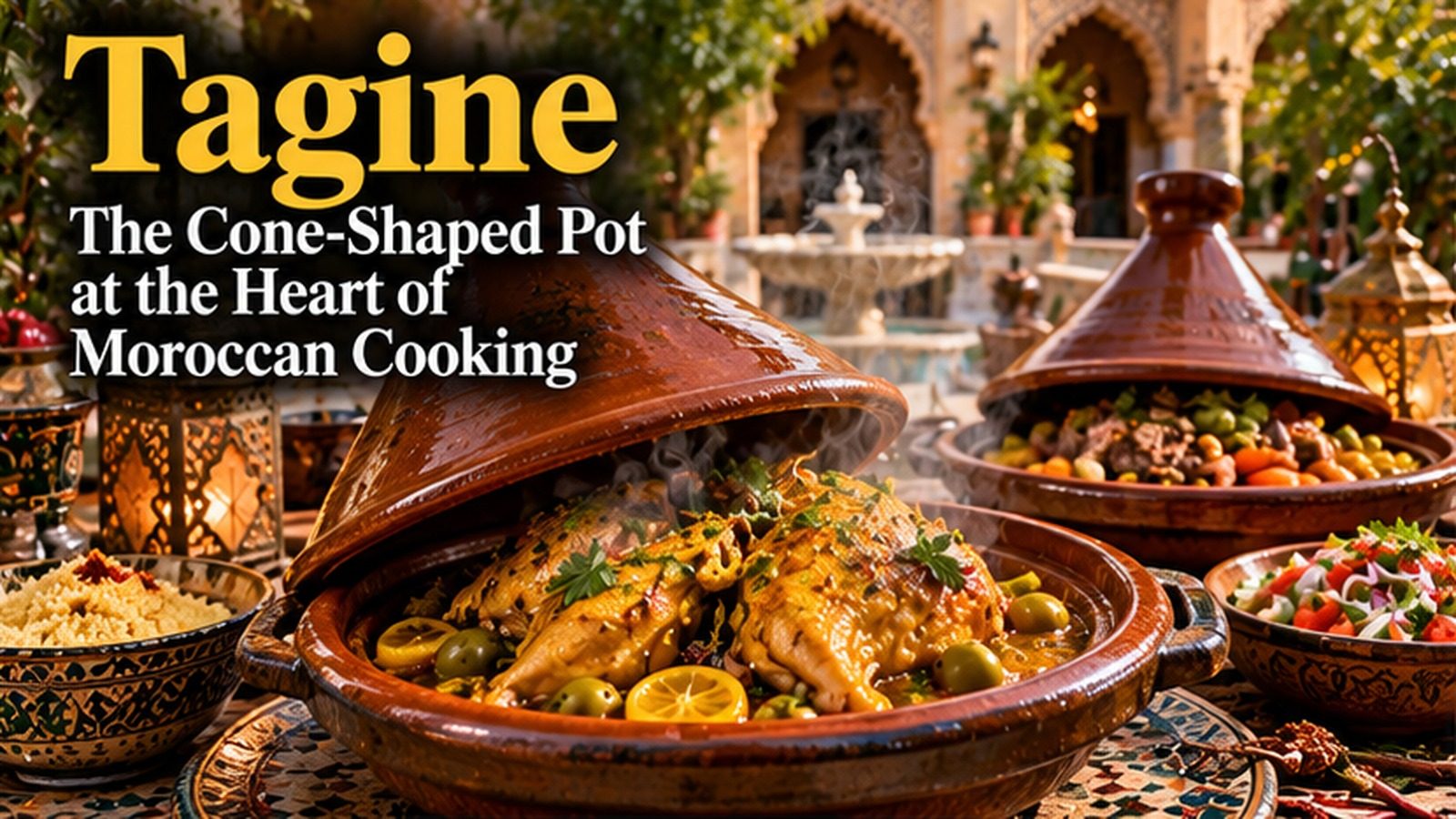
On a small charcoal burner by a roadside café in Morocco, a row of clay pots sits simmering, each topped with a tall, pointed lid like a little hat. Lift one, and a cloud of steam escapes, smelling of saffron, ginger, preserved lemon and slowly cooked meat. Inside, chicken with green olives, or lamb with prunes and almonds, lies in a rich, glossy sauce. This is a tagine — the name of both the pot and the dish — and it is one of the great symbols of North African cooking.
The pot
A tagine (also spelled tajine) consists of two parts:
- A wide, shallow base of glazed or unglazed clay, which sits directly over gentle heat.
- A tall, cone-shaped lid that fits snugly over it.
The clever part is the lid. As the food cooks, steam rises into the cone, cools, condenses and drips back down into the dish. Very little liquid is lost, so the food cooks slowly in its own juices, staying moist and tender. Traditionally, tagines were set over charcoal braziers, and the long, gentle cooking made even tough cuts of meat soft enough to eat with bread and fingers.
Amazigh roots
The tagine is closely associated with the Amazigh (Berber) peoples of North Africa, and many historians believe the cooking method developed among them. Over the centuries, Moroccan cuisine absorbed influences from Arab, Andalusian, Jewish and Ottoman cooks, and from the spice routes that brought cinnamon, ginger, saffron and pepper. The tagine became the vessel for many of those flavours.
Classic tagines
There are countless tagine recipes, but some classics include:
- Chicken with preserved lemon and olives — perhaps the most famous, golden with saffron and turmeric, sharp with salted lemons.
- Lamb with prunes and almonds — sweet and savoury, scented with cinnamon, often served at celebrations.
- Kefta tagine — spiced meatballs simmered in tomato sauce, with eggs cracked over the top at the end.
- Fish tagine — common on the coast, often with tomatoes, peppers and the spicy herb paste chermoula.
- Vegetable tagine — carrots, potatoes, courgettes, peas and more, slowly cooked with spices.
Spice blends matter. Ras el hanout — "head of the shop," meaning the spice merchant's best mix — can include a dozen or more spices. Preserved lemons, salted and left to ferment for weeks, give a unique, tangy flavour.
How it is eaten
A tagine is usually brought to the table in the pot it was cooked in. The lid is lifted with a flourish, and everyone eats from the shared dish, using pieces of round Moroccan bread (khobz) to scoop up the meat, vegetables and sauce, with the right hand. Guests are often pushed the best pieces by their hosts.
Not the same everywhere
Confusingly, the word means different things in different countries. In Tunisia, a tajine is something quite different: a baked dish more like a thick frittata or quiche, made with eggs, cheese, meat and vegetables. In Algeria, the word can refer to a variety of stews and also to a flat earthenware griddle used for bread.
North African cooking has another great dish made with steam: couscous, which is often served alongside or after a tagine at big meals.
Why it matters
The tagine shows how a simple tool, shaped by need — a little fuel, scarce water, and tough meat — can produce some of the world's most loved dishes. It rewards patience, encourages sharing, and fills a room with the smells of a whole history of trade and migration. Lift the lid, and you are tasting North Africa.
Further reading
- Paula Wolfert, The Food of Morocco (Ecco, 2011)
- Claudia Roden, Arabesque: A Taste of Morocco, Turkey, and Lebanon (Knopf, 2006)
- Fatéma Hal, Les Saveurs et les gestes: cuisines et traditions du Maroc (Stock, 1996)