Kitfo: Ethiopia's Celebrated Minced Beef
Finely minced beef warmed in spiced butter and seasoned with fiery mitmita. Kitfo, a dish of the Gurage people, is a favourite for celebrations across Ethiopia.
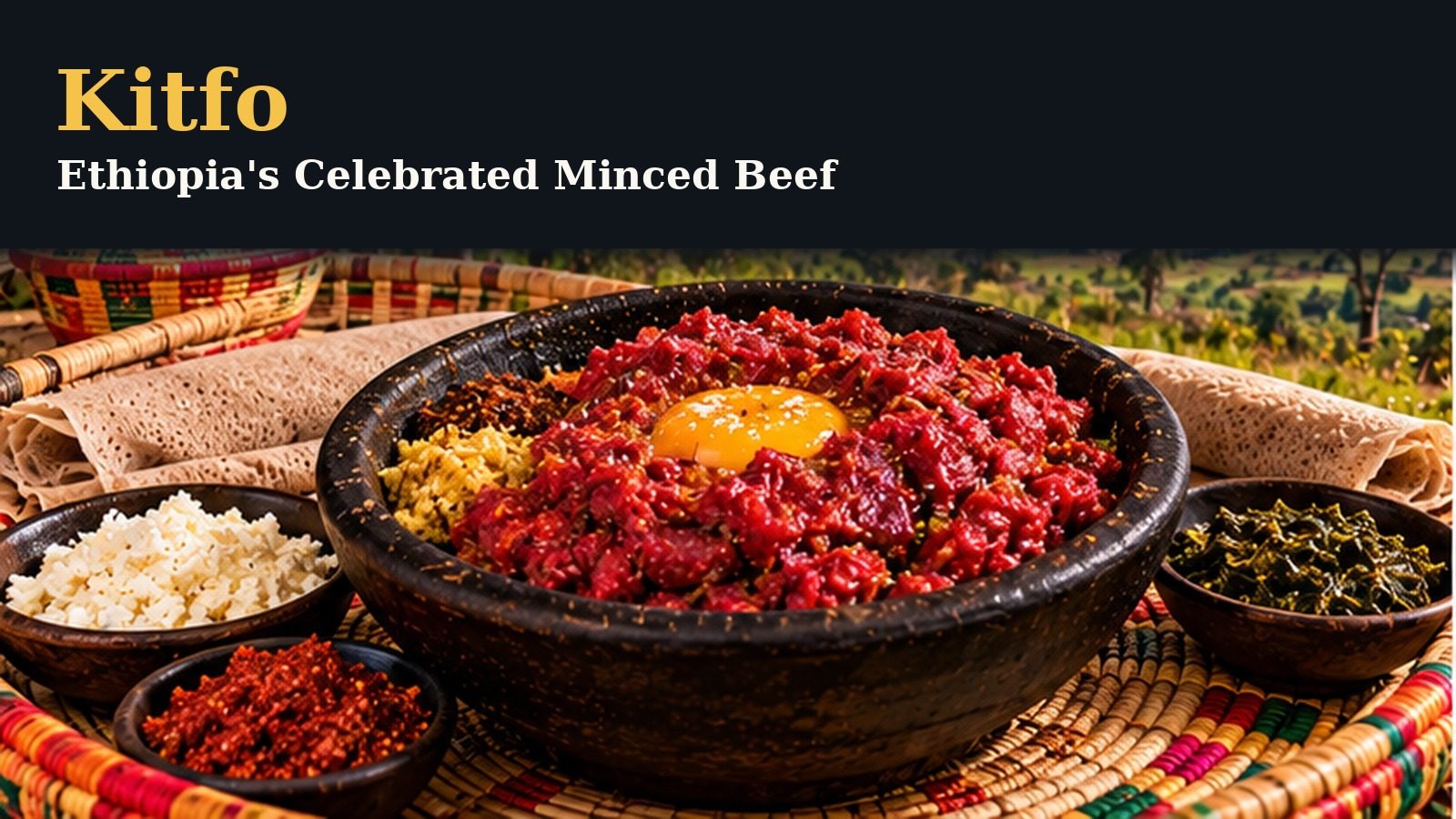
In a busy restaurant in Addis Ababa, a waiter sets down a large tray. In the centre is a mound of finely minced red beef, glistening with spiced butter and flecked with red-orange pepper. Around it are a spoonful of crumbly fresh cheese, a heap of dark green collard greens, and pieces of a dense, chewy flatbread made from the false banana plant. Diners tear off pieces of bread, pinch up some meat, cheese and greens, and eat with their fingers. This is kitfo, one of Ethiopia's most celebrated dishes.
What is kitfo?
Kitfo is made from lean beef, minced very finely by hand with a knife, then mixed with:
- Niter kibbeh, clarified butter infused with spices such as garlic, ginger, cardamom, fenugreek and koseret (a local herb).
- Mitmita, a hot, spicy powder made from bird's eye chillies, cardamom, cloves and salt.
Kitfo is traditionally served raw or very lightly warmed. Diners can usually choose how they want it:
- Tere (raw).
- Leb leb (lightly warmed, rare).
- Yebesele (cooked through).
The Gurage connection
Kitfo is especially associated with the Gurage people of south-central Ethiopia, whose homeland lies south-west of Addis Ababa. For the Gurage, kitfo is a festive dish, prepared for celebrations and to honour guests. It is particularly important at Meskel, the festival of the True Cross, which for the Gurage is the greatest occasion of the year, a time of homecoming and feasting. We described Meskel in our story on Meskel.
On the side
Kitfo is traditionally served with:
- Ayib, a mild, crumbly fresh cheese, similar to cottage cheese, which cools the heat of the mitmita.
- Gomen, chopped collard greens or kale, cooked with butter and spices.
- Kocho, a dense, fermented flatbread made from the enset plant (Ensete ventricosum), also called false banana. Enset is a staple crop for the Gurage and other peoples of southern Ethiopia. Its trunk and roots are scraped, fermented underground and baked into bread.
- Or injera, the spongy fermented flatbread made from teff that accompanies most Ethiopian meals.
Raw meat in Ethiopian cuisine
Eating raw meat is an old tradition in parts of Ethiopia, especially at celebrations. Besides kitfo, there is tere sega ("raw meat"), strips or chunks of raw beef cut from the carcass and eaten with mitmita and awaze (a chilli paste). Raw meat is often considered a luxury, served at weddings and holidays, particularly after fasting periods.
Food safety matters. Raw meat can carry parasites and bacteria, so it should only be eaten from very fresh, high-quality, trusted sources. Many diners, especially visitors, prefer kitfo leb leb or cooked.
Fasting and feasting
Ethiopian Orthodox Christians observe many fasting days, more than 180 a year for the most devout, during which they eat no meat or animal products. This is why Ethiopian cuisine has so many delicious vegetarian dishes. When the fasts end, such as at Fasika (Easter) and Genna (Christmas), families celebrate with meat dishes, including kitfo, doro wat (chicken stew) and raw beef.
Kitfo houses
In Addis Ababa and other cities, there are many kitfo bet (kitfo houses), restaurants specialising in kitfo. They often have a traditional atmosphere and serve the dish in clay bowls or on woven trays. Kitfo is also a favourite in Ethiopian restaurants in the diaspora, in Washington, D.C., London, Tel Aviv and elsewhere.
Variations
There are several related dishes:
- Gored gored: cubes of raw beef, rather than minced, tossed in spiced butter and awaze.
- Kitfo with kocho and ayib: the classic Gurage presentation.
- Vegetarian "kitfo": some restaurants make a fasting version using minced vegetables, mushrooms or legumes with spiced oil.
Why it matters
Kitfo is a dish of celebration and hospitality, linked to the Gurage people, the Meskel festival and the rhythm of fasting and feasting in Ethiopian life. It shows the importance of spices, butter and bread in Ethiopian cuisine, and the bold flavours that make it one of the world's most distinctive food cultures. Sharing a plate of kitfo, eaten with the hands from a common tray, is an experience of Ethiopian generosity.
Further reading
- Harry Kloman, Mesob Across America: Ethiopian Food in the U.S.A. (iUniverse, 2010)
- Marcus Samuelsson, The Soul of a New Cuisine: A Discovery of the Foods and Flavors of Africa (Wiley, 2006)