Hogbetsotso: The Anlo Ewe Festival of the Great Escape
Legend says the Ewe escaped a tyrant king by walking backwards out of his walled city. Each November, the Anlo Ewe of Ghana's Volta Region celebrate that exodus with Hogbetsotso.

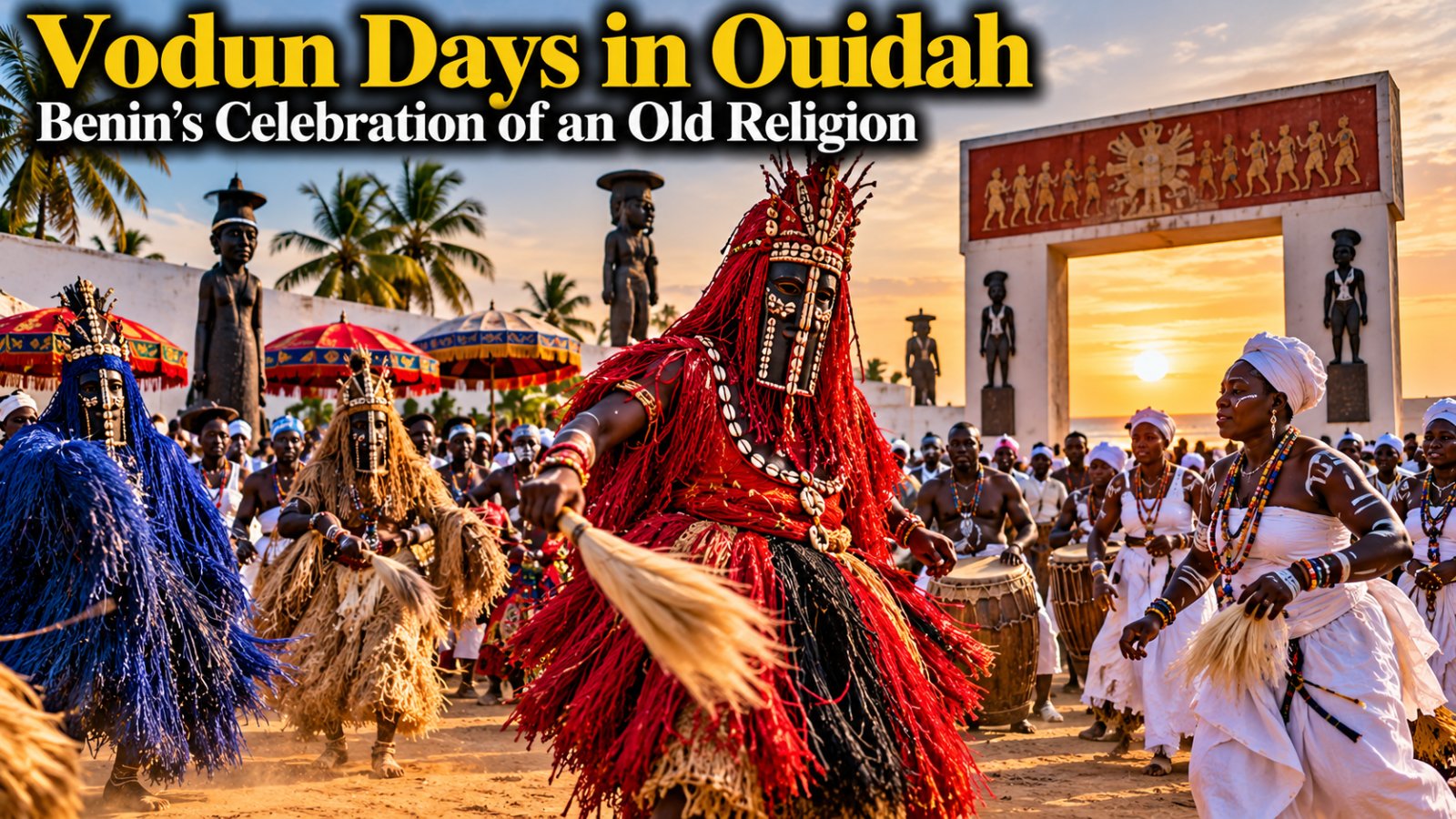
Tomorrow, in the coastal town of Anloga, in Ghana's Volta Region, chiefs will process in rich kente and gold, carried in palanquins beneath huge umbrellas. Drummers will pound out the rhythms of the Ewe, dancers will whirl, and thousands of people, many returning from cities and from abroad, will fill the durbar grounds. It is the grand climax of Hogbetsotso, the festival of the Anlo Ewe people. And at its heart lies a legend of escape.
The tyrant of Notsie
The Ewe people today live in south-eastern Ghana, southern Togo and parts of Benin. According to their oral traditions, their ancestors lived for a time in the walled town of Notsie (or Notse), in what is now Togo.
There, the story goes, they suffered under a cruel king named Agokoli. He forced his subjects to do impossible tasks, such as making rope out of clay mixed with thorns and broken pottery, and punished them harshly. Eventually, the people decided to escape.
The elders devised a clever plan. The women were told to throw their used water against one section of the mud wall every day, softening it. When the wall was soft enough, the people gathered at night, drumming and dancing loudly to cover the noise, and broke through the wall. Then, led by their leaders, they walked backwards out of the town, so that their footprints would appear to lead into Notsie rather than out of it, confusing anyone who tried to follow.
The escapees then divided into groups and travelled in different directions. One group, led according to Anlo tradition by figures such as Togbui Wenya, eventually settled on the coast near the Keta Lagoon and founded the towns of the Anlo state, with Anloga as their capital.
Legend and history
The story of the escape from Notsie is a legend, preserved in oral tradition and song. Historians such as D.E.K. Amenumey and Sandra Greene have studied it alongside other evidence. Many accept that Notsie was a real and important town, and that Ewe groups did migrate from it, probably in the 16th or 17th centuries, but details such as the backwards walk and the clay-and-thorn rope are best understood as symbolic elements of a powerful story about freedom from tyranny.
The name
The name Hogbetsotso is linked to Hogbe, an Ewe name for the ancestral homeland at Notsie, and is usually explained as "the festival of the exodus". It is also called Hogbetsotso Za, za meaning "festival".
The festival
Hogbetsotso is celebrated by the Anlo state, which includes dozens of towns and villages, and it reaches its climax on the first Saturday of November. In 2025, the grand durbar falls on 1 November, and organisers announced that the exodus would be re-enacted in Anloga the day before.
The celebrations usually include:
- A period of peace-making. Before the festival, the community is encouraged to settle disputes and quarrels, so that the festival begins in harmony.
- Cleansing rites. Rituals are performed to purify the land, the people and the sacred stools of the chiefs, and to honour the ancestors.
- The re-enactment of the exodus, sometimes including the famous backwards walk.
- Sweeping and cleaning of towns, symbolising the removal of evil and the start of a new year.
- Drumming and dance, especially the agbadza, the Ewe war dance turned dance of celebration, and others such as atrikpui.
- The grand durbar, when the paramount chief of Anlo, the Awoamefia, sits in state with his sub-chiefs and queen mothers, and receives homage, speeches and visitors.
Ewe culture on display
Hogbetsotso is a showcase of Ewe culture. The Ewe are famous for their drumming, with complex interlocking rhythms played on drums of different sizes, and for their kente cloth, woven in narrow strips, as among the Asante. Our story on kente cloth describes both traditions. The festival also features traditional dress, songs, praise poetry and storytelling.
A homecoming
Like many Ghanaian festivals, Hogbetsotso is a homecoming. Anlo people living in Accra, Lomé, London and New York return to their towns. Development projects are discussed and launched, and the durbar attracts politicians, officials and visitors from across Ghana. It is also a time to celebrate unity among the Ewe and to reflect on their history.
Why it matters
Hogbetsotso turns an ancient story of escape into a living celebration. It honours ancestors who, according to tradition, outwitted a tyrant through cleverness, cooperation and courage. It brings people home, makes peace between neighbours and showcases one of West Africa's great cultures. And it reminds everyone that freedom is something to be remembered, and celebrated, together.
Further reading
- Ghana Tourism Authority — Hogbetsotso Za festival
- Graphic Online — 2025 Hogbetsotso launched at Ohawu (September 2025)
- Sandra E. Greene, Gender, Ethnicity, and Social Change on the Upper Slave Coast: A History of the Anlo-Ewe (Heinemann, 1996)
- D.E.K. Amenumey, The Ewe in Pre-Colonial Times (Sedco, 1986)