Chale Wote: The Street Art Festival That Transformed Old Accra
Every year, murals, performances, music and fashion take over the streets of Jamestown, one of Accra's oldest neighbourhoods. Here is the story of the Chale Wote Street Art Festival.
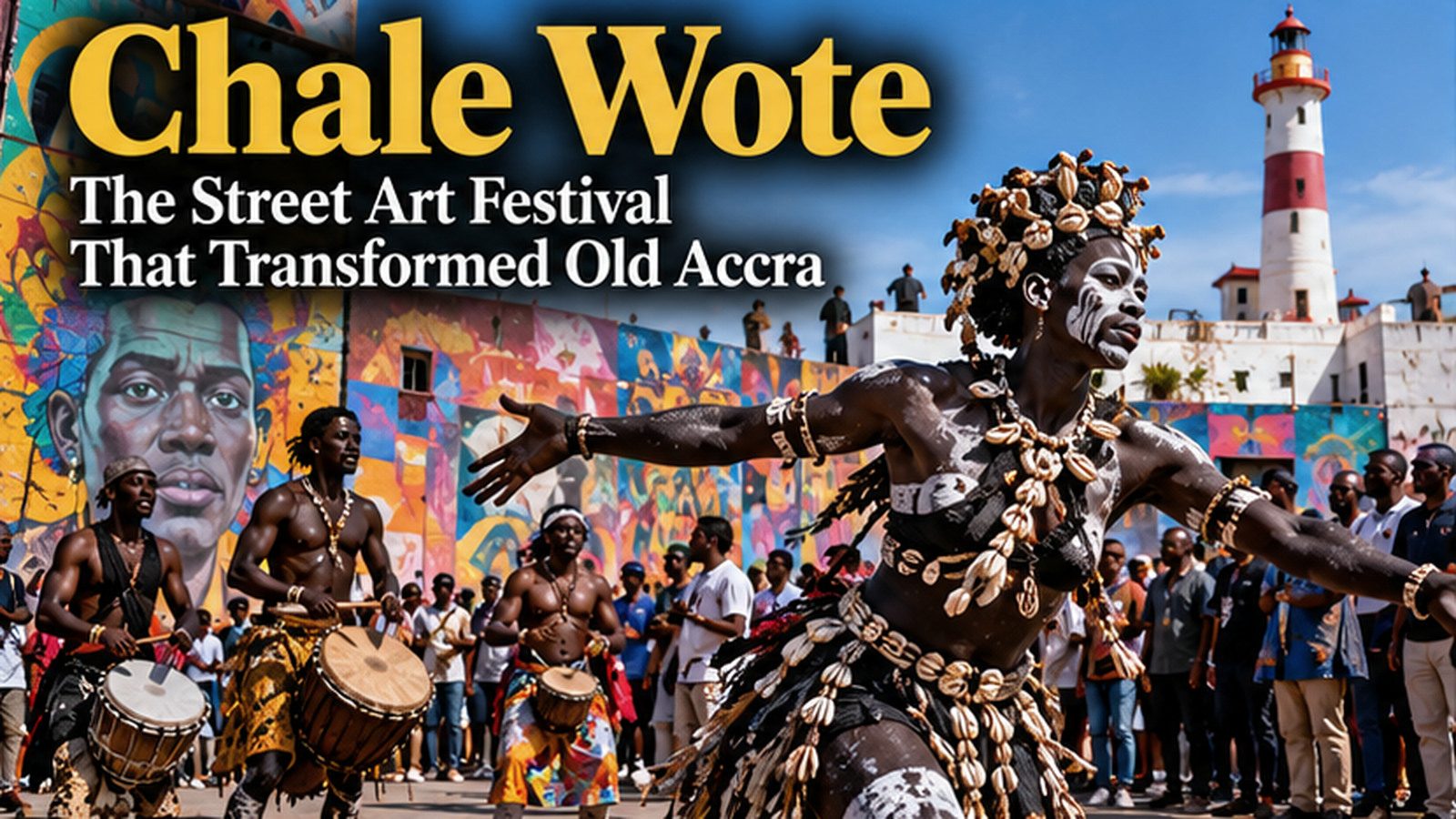
Walk down the main street of Jamestown, in old Accra, during the festival and it is hard to know where to look. Huge, colourful murals cover the walls of colonial-era buildings. A dancer in an extraordinary costume made of recycled materials moves through the crowd. A boxing match takes place in an open-air ring. Musicians play on a stage; fashion designers parade new work; children paint the pavement. Thousands of people fill the street in flip-flops. Welcome to the Chale Wote Street Art Festival.
What the name means
Chale wote is a popular Ghanaian name for flip-flops — the cheap, comfortable rubber sandals worn by almost everyone. In Ga, the language of Accra, it is also often explained as meaning something like "man, let's go!" Both meanings fit: the festival is relaxed, accessible to everyone, and full of movement. You don't need fancy shoes or a ticket to take part.
How it began
The festival was founded in 2011 by Mantse Aryeequaye and Sionne Neely, who had set up a creative platform called ACCRA [dot] ALT to support Ghana's emerging artists. Their idea was to take art out of galleries and into the streets, where ordinary people could experience it — and to do it in Jamestown, one of the oldest and most historic parts of the city.
Jamestown is the heart of the Ga community of Ga Mashie, the traditional core of Accra. It is home to an old lighthouse, colonial forts and fishing communities, as well as poverty and overcrowding. Bringing a major arts festival there was a way of celebrating the neighbourhood's history and energy, and of connecting young artists with local residents. The area is also the stage for the Ga people's great harvest festival, Homowo.
What happens
Chale Wote has grown into one of the largest arts festivals in West Africa, typically held in August and drawing tens of thousands of visitors over its run. Its programme usually includes:
- Murals and street painting — artists from Ghana and abroad paint walls throughout Jamestown, many of which remain after the festival.
- Performance art — dancers, actors and artists stage performances in the streets, often with striking costumes.
- Music — from highlife and hiplife to experimental sound.
- Film screenings, talks and workshops.
- Fashion — Ghanaian designers showcase their work.
- Boxing — Jamestown has a famous boxing tradition, and matches have been part of the festival.
- Installations and exhibitions in courtyards, alleys and old buildings.
Each edition has a theme, inspired by African history, mythology, science fiction and contemporary issues, which artists respond to in their work.
Art for everyone
Chale Wote's guiding idea is access. Most events are free and outdoors. Local residents, children and visitors share the same space. The festival has become a launch pad for young Ghanaian artists, many of whom have gone on to international careers, and it has inspired similar street art events across the region.
Questions of change
As the festival has grown, it has raised questions about gentrification and who benefits from the attention Jamestown receives. Organisers and residents have discussed how to make sure the community, not just visitors and artists, shares in the festival's success — a conversation common to many arts festivals around the world.
Why it matters
Chale Wote shows how art can transform a city — not by building expensive galleries, but by filling the streets with colour, music and ideas, and inviting everyone to join in. In flip-flops, of course.