When an Elder Dies, a Library Burns: Africa's Oral Traditions
Epics, genealogies, praise poems and folk tales have carried African history and wisdom for centuries without being written down. How does oral tradition work, and can it be trusted as history?

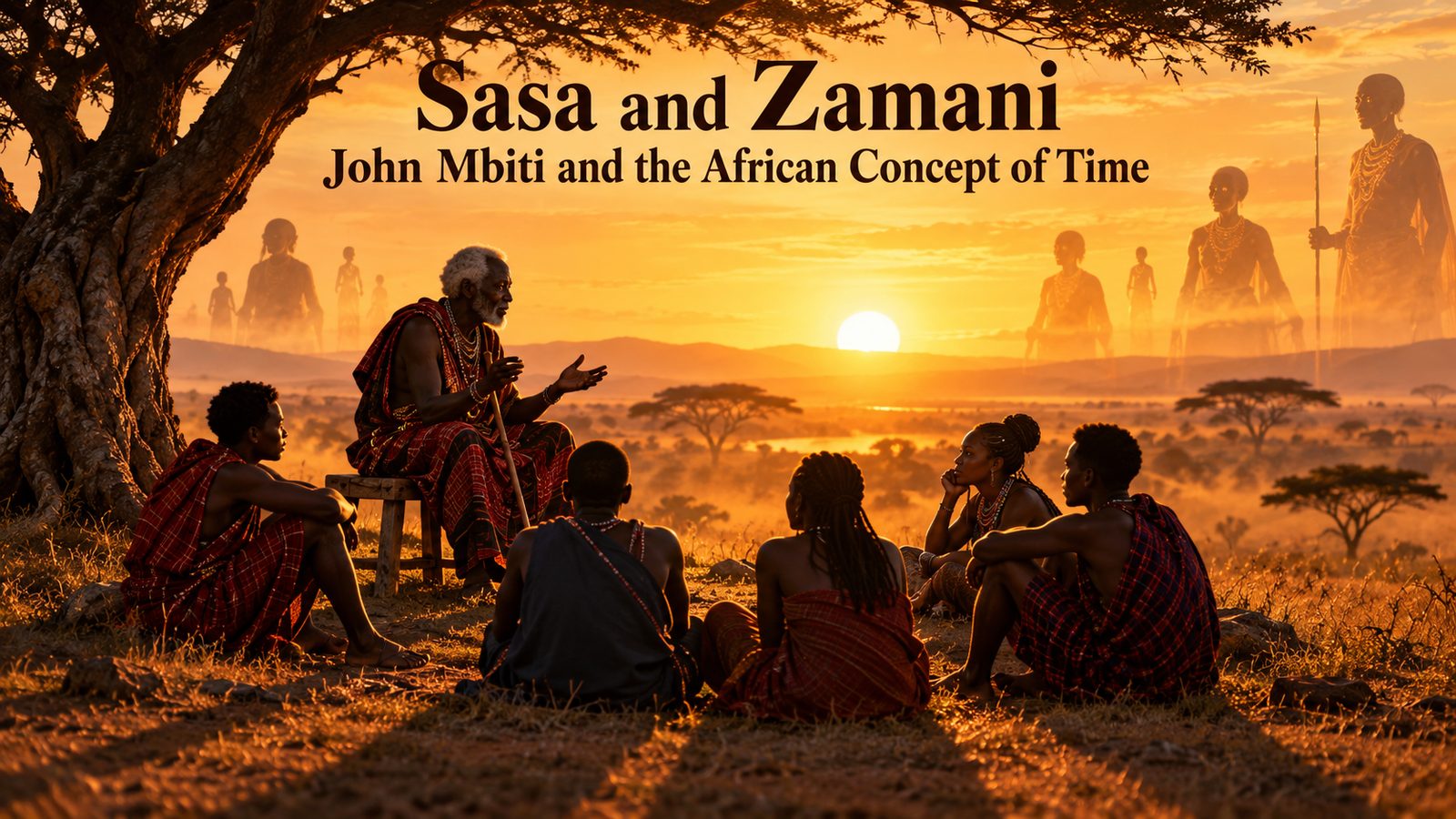
"In Africa, when an old man dies, a library burns to the ground." These words are usually attributed to the Malian writer and scholar Amadou Hampâté Bâ, who is said to have spoken them at UNESCO in the early 1960s. He wanted to warn the world that Africa's knowledge, carried in the memories of elders, griots and storytellers, was in danger of being lost. His words have been quoted ever since, because they capture something essential: for much of its history, a great deal of Africa's knowledge has been held not in books, but in voices.
What is oral tradition?
Oral tradition refers to knowledge, history, literature and wisdom passed down by word of mouth from one generation to the next. In Africa, oral traditions include:
- Epics, long heroic narratives such as the Epic of Sunjata of the Mande peoples of West Africa, or the Mwindo epic of the Nyanga of Congo.
- Genealogies and king lists, recited by court historians to record dynasties and lineages.
- Praise poetry, such as the izibongo of the Zulu, the oriki of the Yoruba and the lithoko of the Basotho, celebrating chiefs, heroes, clans and individuals.
- Myths and legends about origins, migrations and the founding of kingdoms.
- Folk tales, such as the stories of Anansi the spider or the hare and the tortoise.
- Proverbs, riddles and songs.
Of course, many African societies also had writing for centuries: Ge'ez in Ethiopia, Arabic and Ajami across the Sahel, Tifinagh among the Amazigh, and others. Oral and written traditions often existed side by side.
The keepers of memory
In many societies, oral tradition was entrusted to specialists. The best known are the griots (jeli in Mandinka) of West Africa: hereditary musicians, historians, genealogists and advisers to kings, who recite epics and praise songs to the accompaniment of the kora or balafon. We described them in our story on the kora and griots.
Other examples include:
- The abiru, court ritualists of the old kingdom of Rwanda, who memorised the esoteric code of royal ritual.
- Court historians and drummers in Asante, Buganda and Dahomey, who preserved royal histories.
- Elders and diviners in many societies, who kept knowledge of law, medicine, religion and history.
The Epic of Sunjata
One of the most famous oral traditions is the Epic of Sunjata (or Sundiata), the story of the founder of the Mali Empire in the 13th century. It tells of a disabled child who could not walk, mocked by others, who rises to defeat the sorcerer-king Sumanguru and found a great empire. The epic has been performed by griots for centuries, in many versions. In 1960, the Guinean historian Djibril Tamsir Niane published a version based on the telling of the griot Mamadou Kouyaté, which was translated into English in 1965 and became widely read.
Can oral tradition be trusted as history?
For a long time, many European historians dismissed oral traditions as myths, unreliable as historical evidence, and claimed that Africa had "no history" before colonial records. This prejudice was challenged in the 1960s and later by scholars such as the Belgian historian Jan Vansina, who worked in Congo and Rwanda.
In his books, especially Oral Tradition as History (1985), Vansina argued that oral traditions can be used as historical sources, if they are studied critically, like any other source. Historians must ask:
- Who told the tradition, and why?
- How was it transmitted, and how might it have changed?
- Does it serve political interests, for example, to justify a ruler's claim?
- Can it be compared with other traditions, archaeology, linguistics or written sources?
Oral traditions can preserve remarkable details over long periods, especially where specialists were trained to memorise them precisely. But they can also change, compress time, or be reshaped to serve the present. The historian's task is to understand both.
Literature, not just history
Oral traditions are also literature, art forms with their own beauty and techniques. The scholar Ruth Finnegan, in her pioneering book Oral Literature in Africa (1970), showed the richness of African oral poetry, storytelling, drama and song. Performers use repetition, rhythm, call-and-response, music, gesture and audience participation to bring stories to life. Every performance is unique.
Oral traditions today
Oral traditions continue to thrive in many forms: griots perform at weddings and on radio; praise poets perform at political events, including presidential inaugurations in South Africa; storytellers appear on television and YouTube; and hip hop and spoken word artists draw on traditions of praise poetry and verbal art.
UNESCO has recognised several oral traditions as part of the Intangible Cultural Heritage of Humanity, and researchers and communities are recording elders' knowledge before it is lost.
Why it matters
Africa's oral traditions are among humanity's great treasures: libraries of history, wisdom and art, carried in memory and voice. They remind us that writing is only one way of preserving knowledge, and that listening carefully to elders, griots and storytellers can reveal histories that no archive holds. Hampâté Bâ's warning still matters: each elder who passes away without being heard takes a library with them.
Further reading
- Jan Vansina, Oral Tradition as History (University of Wisconsin Press, 1985)
- Amadou Hampâté Bâ, "The Living Tradition," in J. Ki-Zerbo (ed.), UNESCO General History of Africa, Vol. I: Methodology and African Prehistory (UNESCO / Heinemann, 1981)
- Ruth Finnegan, Oral Literature in Africa (Oxford University Press, 1970; Open Book Publishers, 2012)
- D.T. Niane, Sundiata: An Epic of Old Mali (Longman, 1965)