Nyama Choma: Kenya's Roasted Meat and the Art of Sitting Together
In Kenya, a weekend plan often starts with two words: nyama choma. Goat or beef, slow-roasted over charcoal, shared on a wooden board with ugali and kachumbari.
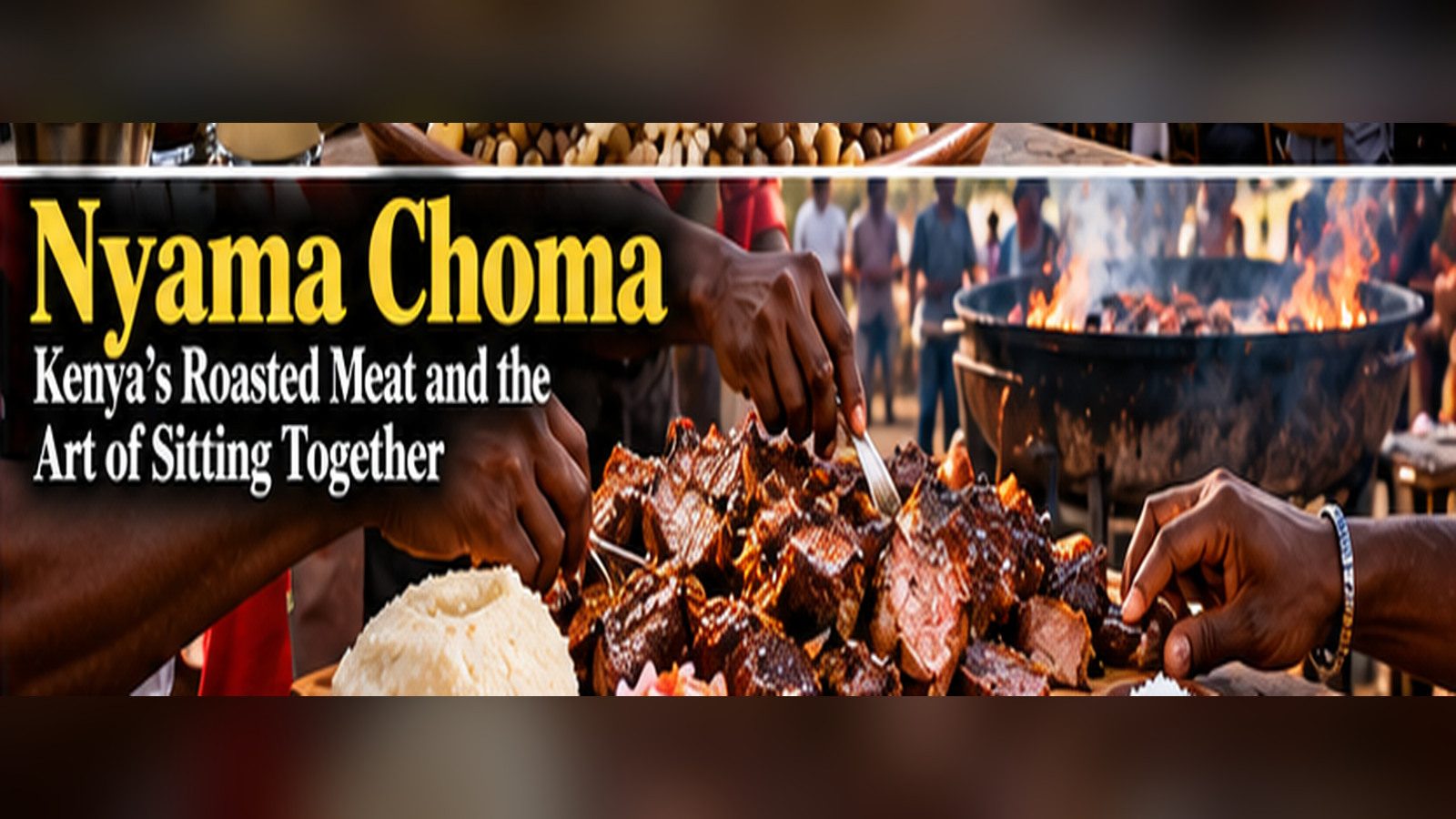
It is Saturday afternoon in Nairobi. At a busy roadside joint, friends gather around a table. At the back, a butcher hangs sides of goat; customers walk up, point at the cut they want, and have it weighed. It is handed to the grill man, who places it over glowing charcoal and roasts it slowly. An hour or more later, the meat arrives on a wooden board, chopped into bite-sized pieces, with a pile of salt, a bowl of fresh tomato-and-onion salad and a steaming white block of ugali. Everyone reaches in with their hands. Nobody is in a hurry. This is nyama choma, Kenya's favourite way to eat — and to spend time together.
What it is
Nyama choma is Kiswahili for "roasted meat." It usually means:
- Goat (mbuzi) — the most popular and most prized choice.
- Beef (ng'ombe).
- Sometimes lamb, chicken or, in coastal areas, fish.
The meat is roasted over charcoal, often without heavy marinades — just salt — so the flavour comes from the meat and the smoke. Good nyama choma is crisp on the outside, juicy inside and slowly cooked. Some places also serve mutura, a Kenyan sausage made with offal and blood.
The sides
Nyama choma is rarely eaten alone. Classic accompaniments include:
- Ugali — a stiff porridge made from maize flour, eaten by hand, Kenya's staple food.
- Kachumbari — a fresh salad of chopped tomatoes, onions, chilli, coriander and sometimes lemon.
- Sukuma wiki — sautéed collard greens, whose name means "push the week," because they are cheap enough to stretch a budget until payday.
- Roasted bananas or potatoes.
- And, for many, a cold beer or soda.
How it works
In many Kenyan nyama choma joints, the meat is ordered by weight. Customers choose the cut from the butchery, pay by the kilo, and wait while it roasts. Some places offer "wet fry" (meat cooked in a tomato sauce) or "dry fry" (fried) as alternatives. The meat is brought to the table on a wooden board and chopped into small pieces with a sharp knife.
The waiting is part of the experience. Roasting good meat can take a long time, and friends spend that time talking, catching up, watching football and arguing about politics.
More than a meal
For many Kenyans, nyama choma is a social ritual:
- Weekends — friends gather for long afternoons.
- Celebrations — birthdays, graduations, promotions and reunions.
- Business — deals are discussed over a board of goat.
- Politics — politicians are known to host supporters at nyama choma events.
Some places have become famous. Nairobi's Carnivore restaurant, which serves roasted meats carved at the table from Maasai swords, has drawn visitors for decades. But most nyama choma is eaten at small neighbourhood places with plastic chairs and smoky grills.
Roots
Roasting meat over an open fire is an ancient practice among Kenya's many pastoral and farming communities, such as the Maasai, Kalenjin, Kikuyu and Luo. Traditionally, meat was eaten at ceremonies and special occasions, often when animals were slaughtered for celebrations or rituals. Over the 20th century, urban life and the rise of butcher-bars turned nyama choma into an everyday pleasure across the country.
Like South Africa's braai, nyama choma shows how grilling meat can become a national pastime, bringing together people of different backgrounds around the same fire.
Why it matters
Nyama choma is a reminder that the best meals are about more than food. It is about time, company and the slow pleasure of waiting together for something good. In a fast-moving country, a board of roasted goat is an invitation to sit down, stay a while and talk.