Gorée Island: Memory, Debate and the Door of No Return
A short ferry ride from Dakar, the island of Gorée has become one of the world's most powerful places to remember the Atlantic slave trade. Its story is also debated.
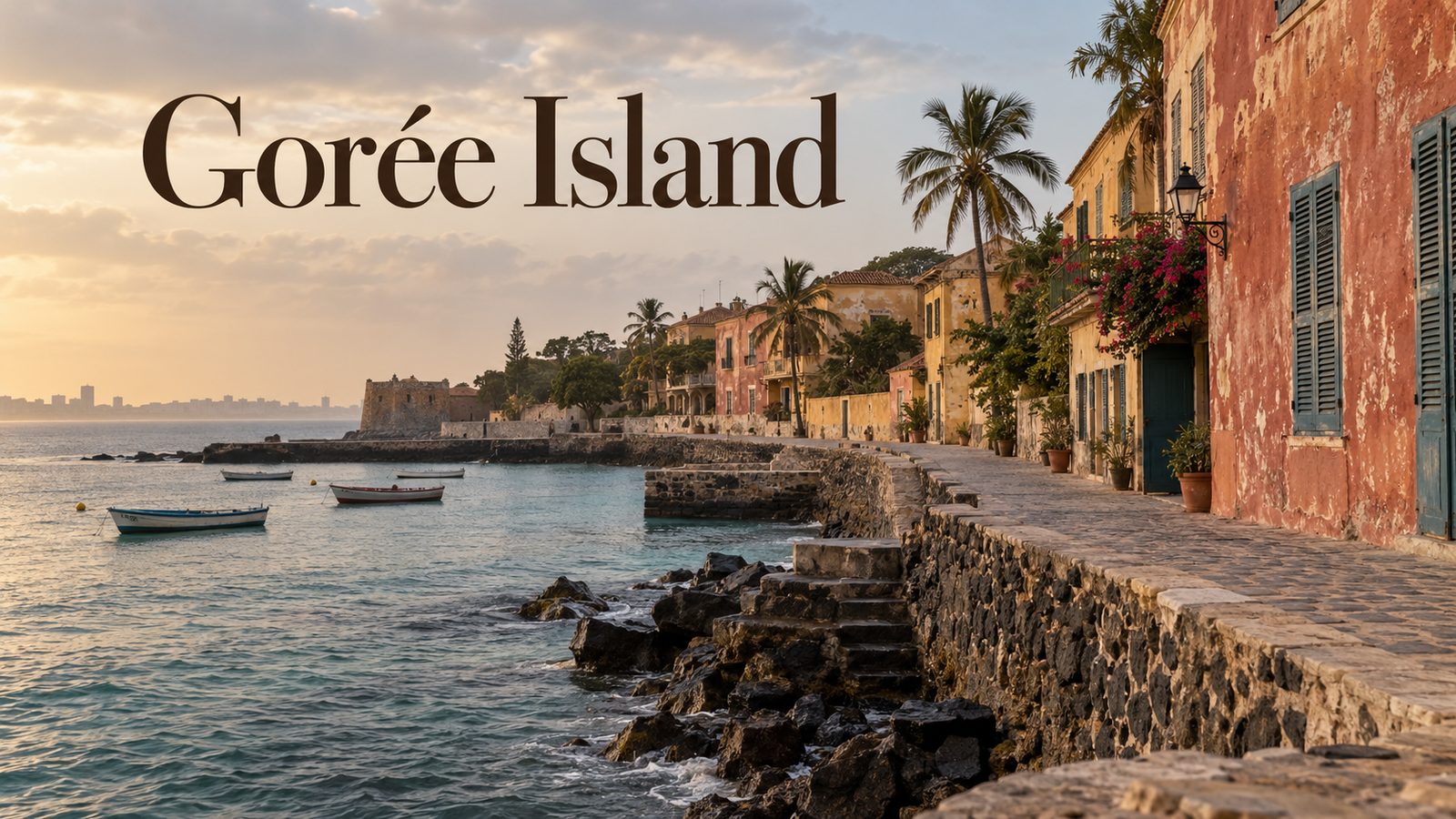
Gorée is small enough to walk around in an hour. Its narrow sandy lanes are lined with pastel houses with wooden balconies, bougainvillea spills over the walls, and there are no cars. Children swim off the little beach by the ferry jetty. It would be an idyllic place — if it were not for what the island has come to represent. For millions of visitors, Gorée is a place to confront the history of the Atlantic slave trade.
A strategic island
Gorée lies about three kilometres off the coast of Dakar, Senegal's capital. Its sheltered harbour made it valuable to European powers from the 15th century onward. Over the following centuries, it passed between the Portuguese, Dutch, English and French, who built forts, warehouses and homes there. It became a trading post for gum arabic, gold, ivory — and enslaved people.
By the late 18th century, Gorée had a mixed population of Europeans, free Africans, people of mixed heritage and enslaved Africans. Among the most notable residents were the signares, wealthy African and mixed-race women who owned property and traded, and who built some of the island's grandest houses.
The House of Slaves
The island's best-known building is the Maison des Esclaves (House of Slaves), a pinkish two-storey house built in the late 18th century. Downstairs are small, dark cells; upstairs, airy living quarters. At the back, a narrow doorway opens directly onto the sea. This is the "Door of No Return."
For decades, the house was presented to visitors by its curator, Boubacar Joseph Ndiaye, who told vivid stories of captives held in the cells and forced through the door onto ships bound for the Americas. His tours moved visitors to tears, and the Door became a global symbol. Heads of state and public figures — including Nelson Mandela, Pope John Paul II and Barack Obama — stood in the doorway and spoke about memory and suffering.
A debated history
Historians have questioned parts of the story. Many argue that:
- Gorée was a relatively small centre of the slave trade compared with other places on the West African coast, and the number of people shipped from the island itself was far lower than sometimes claimed.
- The House of Slaves was most likely a merchant's residence, where a small number of enslaved domestic workers may have lived, rather than a major holding centre.
- The Door, opening onto rocks, would have been an impractical place to load ships.
Defenders of the site respond that Gorée was undeniably part of the trade; that the House stands for the countless similar buildings along the coast; and that what matters most is its power as a place of memory. Many visitors, especially people of African descent, describe their visit as a pilgrimage, regardless of the details. UNESCO, which listed Gorée as a World Heritage Site in 1978 — one of the first on the list — describes it as a symbol of human exploitation and a sanctuary for reconciliation.
Both things can be true: the history needs careful facts, and the memory needs a place.
Gorée today
Around 1,600 people live on Gorée today. Besides the House of Slaves, the island has a history museum, a women's museum, the ruins of the old fort on its hill, artists' studios and a small market. Ferries run frequently from Dakar, and the island is busy with Senegalese families, school groups and international visitors.
Why it matters
The Atlantic slave trade took more than 12 million Africans across the ocean, from many ports along the coast. Gorée has become the place where that vast history is most often remembered. It reminds us, too, that heritage sites must be both honest and humane: careful with facts, and open to the grief that visitors bring with them. Like the debates around the Benin Bronzes, the conversation about Gorée is part of how Africa and the world continue to reckon with the past.