Eid al-Fitr Sweets: From Egypt's Kahk to Morocco's Ghriba
As Ramadan ends, kitchens across North and West Africa fill with the smell of butter, sugar and dates. Here is a tour of the sweets that mark Eid al-Fitr.
In the last days of Ramadan, the quiet daytime hours of fasting are often filled with a different kind of activity: baking. In homes across Egypt, women gather around trays of dough, shaping round cookies and pressing patterns into them. In Moroccan kitchens, almonds are ground and honey is warmed. In Algeria and Tunisia, semolina pastries are stuffed with dates. By the time Eid al-Fitr arrives — the "festival of breaking the fast," celebrated as Ramadan ends — tables are piled high with sweets to share with family, neighbours and visitors.
Egypt: kahk
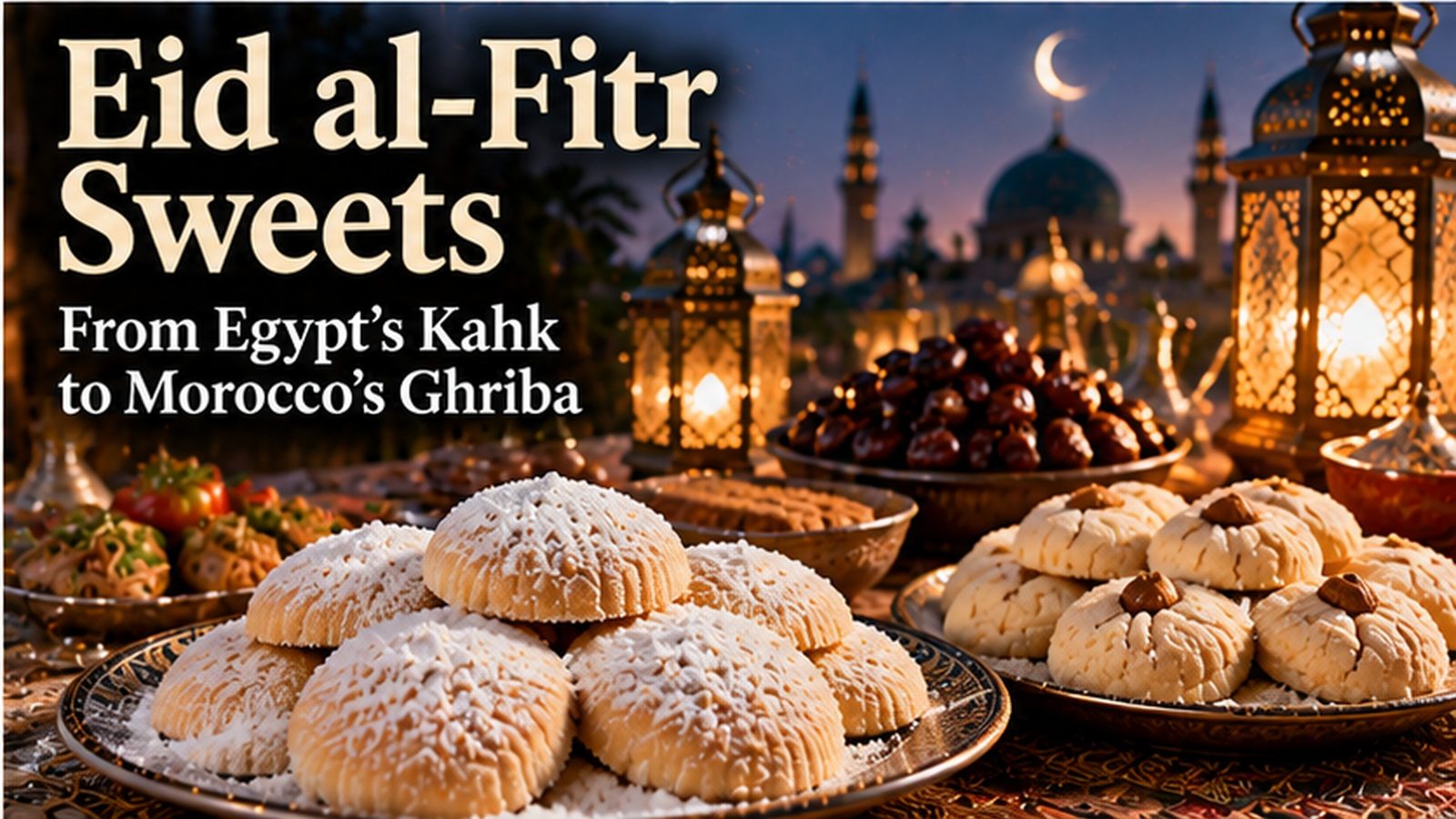
In Egypt, the essential Eid sweet is kahk (or ka'ak): round, buttery cookies dusted thickly with powdered sugar. They may be plain or filled with dates, nuts, or a honey-sesame paste called agameya. The tops are decorated with patterns pressed using special tongs or wooden moulds.
Making kahk is often a family event, with relatives working together to make large batches. The tradition is very old: food historians link it to decorated cakes depicted in ancient Egypt, and to the Fatimid era in medieval Cairo, when rulers distributed cookies during the festival. Bakeries across Egypt sell kahk by the kilo in the days before Eid.
Morocco: ghriba and gazelle horns
In Morocco, Eid tables often feature:
- Ghriba — crumbly cookies with a cracked top, made with almonds, semolina, sesame or coconut.
- Kaab el ghzal — "gazelle horns," crescent-shaped pastries filled with almond paste scented with orange blossom water.
- Fekkas — crunchy twice-baked biscuits with almonds and raisins.
These are served with mint tea, and families visit each other to share them.
Algeria and Tunisia: makroud and baklawa
In Algeria and Tunisia, a classic is makroud: diamond-shaped pastries of semolina filled with date paste, fried or baked, then soaked in honey or syrup. Both countries also make many kinds of almond pastries and their own versions of baklawa. In Algeria, a rich, many-layered almond baklawa is a highlight of Eid tables.
Sudan and the Horn
In Sudan, Eid cookies called kahk and biskawit are baked in large quantities, and families compete to make the most beautiful trays. In Somalia and among Somali communities, xalwo (halwa) — a dense, sticky sweet made with sugar, ghee and spices like cardamom — is served on Eid and at weddings.
West Africa
In Senegal, Eid al-Fitr is called Korité. The day is more about savoury feasting — often lamb or chicken with onion sauce — and visiting, but sweet drinks and pastries such as beignets are popular. In northern Nigeria, where the festival is known as Sallah, families prepare rich meals and snacks such as chin chin and masa (rice cakes) to share with visitors.
Sweets for sharing
Across all these places, the most important ingredient is sharing. Eid sweets are not just for one's own family: they are given to neighbours, carried on visits to relatives, and offered to every guest who arrives. Before the holiday, Muslims also give zakat al-fitr, a gift of food or money for the poor, so that everyone can celebrate — the culmination of the month of generosity described in our story on Ramadan across Africa.
Why it matters
Eid al-Fitr sweets mark the joyful end of a month of discipline. From Cairo's sugar-dusted kahk to Morocco's almond-filled gazelle horns, they show how a shared celebration takes many local forms — and how, across Africa, the best way to say "Eid Mubarak" is often with a plate of something sweet.
Further reading
- Claudia Roden, The New Book of Middle Eastern Food (Knopf, 2000)
- Paula Wolfert, The Food of Morocco (Ecco, 2011)
- Middle East Eye — Food and Ramadan coverage