A Third of the World's Languages: Africa on International Mother Language Day
Africa is home to somewhere between 1,500 and 3,000 languages. On International Mother Language Day, here is a guide to the continent's linguistic riches — and the risks they face.
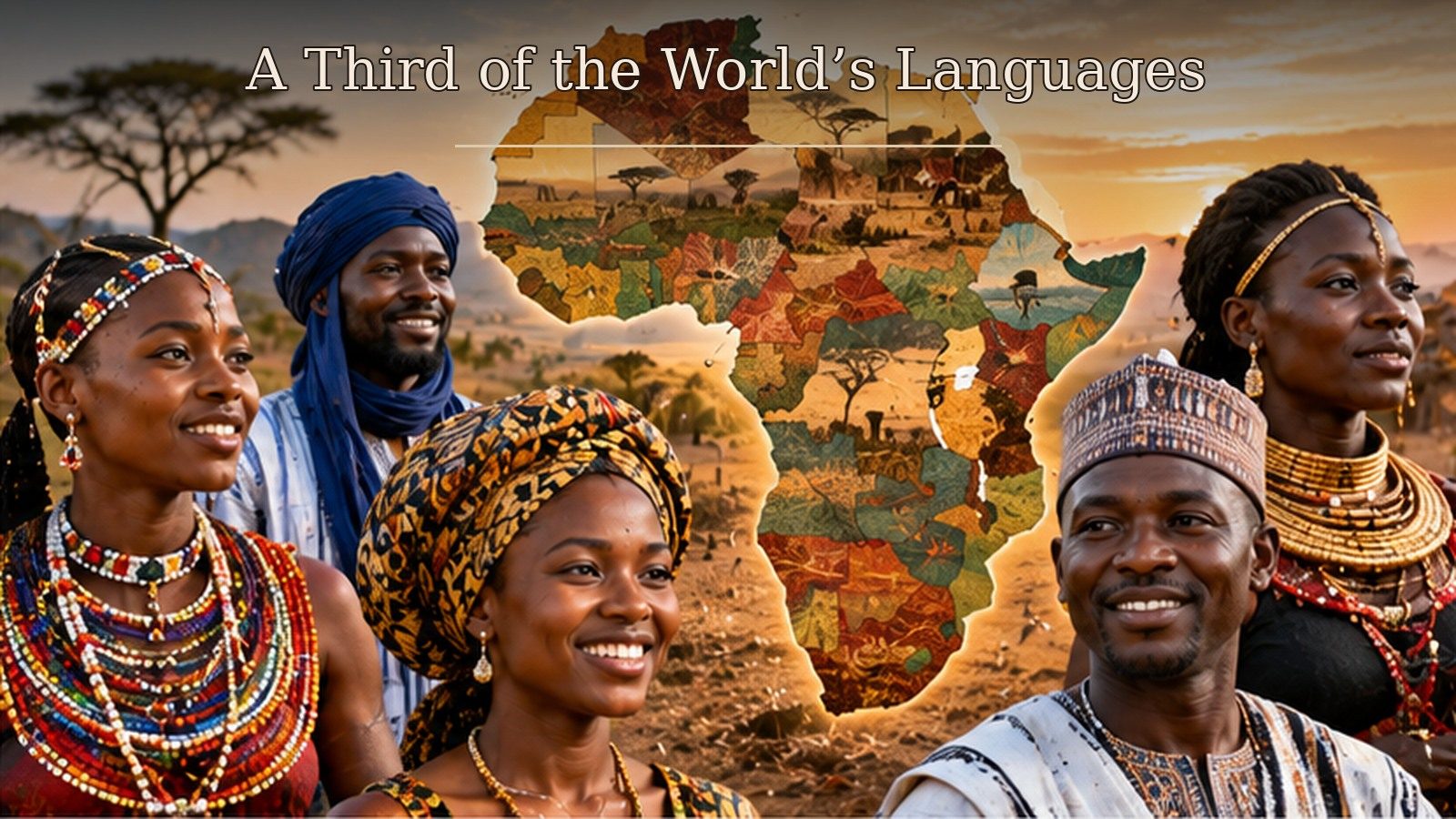
Every 21 February, the world marks International Mother Language Day, a UNESCO observance that celebrates the languages people first learn at home. This year is its 25th anniversary. There is no better place to think about it than Africa, a continent where it is perfectly normal for a child to grow up speaking three or four languages before starting school.
How many languages?
No one can give an exact number — partly because the line between a "language" and a "dialect" is often political rather than scientific — but estimates usually range from about 1,500 to more than 2,000, and some counts go higher. By UNESCO's reckoning, roughly one in three of all the languages spoken on Earth is African.
Some countries are extraordinarily diverse:
- Nigeria has more than 500 languages.
- Cameroon has around 250, earning it the nickname "Africa in miniature."
- The Democratic Republic of the Congo has more than 200.
- Ethiopia, Chad and Tanzania each have scores of languages.
The great language families
Linguists group most of Africa's languages into a few large families:
- Niger-Congo — by far the largest, with well over a thousand languages, including the vast Bantu branch (isiZulu, Shona, Kikongo, Kiswahili and hundreds more), as well as Yoruba, Igbo, Akan, Wolof and Fula.
- Afroasiatic — spoken across North Africa and the Horn, including Arabic, Amharic, Somali, Hausa and the Amazigh (Berber) languages. Ancient Egyptian belonged to this family too.
- Nilo-Saharan — spoken in parts of East and Central Africa and the Sahel, including Maasai, Luo, Kanuri and Songhay (though some scholars question whether this is a single family).
- Khoisan languages of southern Africa — famous for their click consonants, such as !Xóõ and Juǀ'hoan. Some southern Bantu languages, including isiXhosa and isiZulu, borrowed clicks from them.
There is also Malagasy, the language of Madagascar, which belongs to the Austronesian family — closely related to languages of Borneo, reflecting settlers who crossed the Indian Ocean more than a thousand years ago.
Why Mother Language Day exists
The day commemorates events in Dhaka (now the capital of Bangladesh) on 21 February 1952, when students protesting for the recognition of Bengali as an official language were shot by police. UNESCO proclaimed International Mother Language Day in 1999, and it was first observed in 2000. Its message is that people have the right to learn, live and be educated in their own languages.
Languages at risk
Many African languages are thriving — Kiswahili, Hausa, Yoruba, Amharic, isiZulu and others have tens of millions of speakers and are growing. But many smaller languages are in danger. UNESCO counts a large number of Africa's languages among the world's endangered ones, and warns that many tongues with only a few thousand speakers may not survive the next hundred years.
The reasons include:
- Urbanisation, as young people move to cities where larger languages dominate.
- Schooling mostly in English, French or Portuguese.
- Economic pressure, as parents choose languages they think will help children get jobs.
- Media and technology, which have long favoured a few global languages.
Learning in your own language
Research consistently shows that children learn best when they begin school in a language they understand. More than half of Africa's countries now have policies that use two or more languages in schools, starting children in a local language and bringing in a European one later. New technology — from mobile apps to artificial intelligence tools — is also being used to create books, dictionaries and lessons in African languages that previously had little written material.
Why it matters
A language is not just a way of saying things; it is a way of seeing the world. Every African language carries its own proverbs, songs, stories, knowledge of plants and animals, and ways of being polite or funny. When a language disappears, all of that goes with it. On Mother Language Day, the best way to celebrate is simple: speak your language, teach it to a child — and learn a few words of someone else's.
Further reading
- UNESCO — UNESCO and the promotion of languages in Africa: cultural diversity and multilingualism
- UN News — 3,000 languages in the world face extinction, UNESCO warns
- Bernd Heine and Derek Nurse (eds.), African Languages: An Introduction (Cambridge University Press, 2000)