Tinariwen and the Desert Blues of the Tuareg
Electric guitars, hypnotic rhythms and songs of exile: Tinariwen began in refugee camps and rebel bases and became the world's best-known Tuareg band.
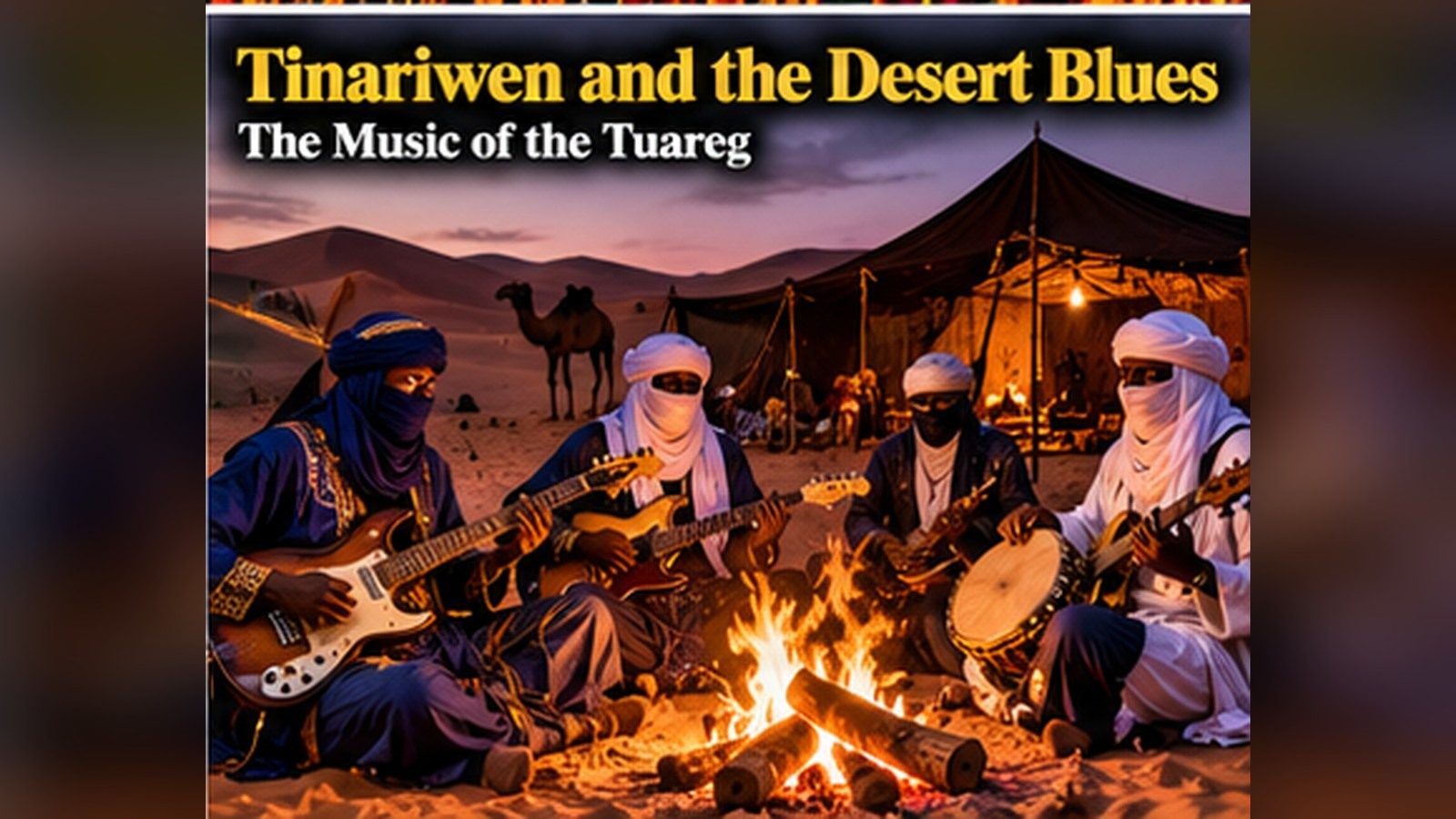
Picture a fire in the desert at night. A group of men in indigo turbans sit with electric guitars plugged into a small amplifier run from a car battery. One plays a circling, hypnotic riff; another answers; a woman claps and ululates. A deep voice sings in Tamashek about exile, longing, and the desert. This is the music the world came to call desert blues — and the band that carried it from the Sahara to the global stage is Tinariwen.
Who are the Tuareg?
The Tuareg (who call themselves Kel Tamasheq and other names) are an Amazigh people of the central Sahara and Sahel, living across Mali, Niger, Algeria, Libya and Burkina Faso. Traditionally nomadic herders and caravan traders, they are known for their indigo clothing, the veils worn by men, and silver jewellery such as the Agadez cross.
In the 20th century, Tuareg life was turned upside down. New national borders cut across their lands; droughts in the 1970s and 1980s killed herds and drove families into poverty; and tensions with the governments of Mali and Niger led to repression and rebellion.
Born in exile
Tinariwen's story begins with Ibrahim Ag Alhabib, born in northern Mali around 1960. As a child, he saw his father executed during the suppression of a Tuareg uprising in the early 1960s. Growing up in exile in Algeria and Libya, he became fascinated by the guitar — supposedly after seeing a cowboy film — and built his first instrument from a tin can, a stick and bicycle wire.
In the late 1970s and early 1980s, he and other young Tuareg exiles, known as ishumar (from the French chômeur, "unemployed"), began playing together. Many of them later trained in camps in Libya and fought in the Tuareg rebellion of the 1990s. Their name became Tinariwen — "the deserts," or "the empty places."
A new sound
Tinariwen's music combines:
- Traditional Tuareg music, including the women's drum tradition (tende) and the hypnotic, repetitive melodies of desert song.
- The electric guitar, played in interlocking, looping patterns.
- Influences from Arab and Berber pop, Malian music, and Western rock and blues heard on cassettes.
The lyrics, sung in Tamashek, speak of assouf — a word meaning longing, nostalgia and loneliness — and of exile, political struggle, unity and the beauty of the desert. Their cassettes were copied and passed from hand to hand across the Sahara for years before the outside world heard of them.
From the desert to the world
After the peace accords of the 1990s, the band laid down their weapons and focused on music. In 2001, they performed at the first Festival au Désert near Timbuktu, and released their first internationally distributed album, The Radio Tisdas Sessions. Tours, acclaimed albums and collaborations with Western rock musicians followed. In 2012, their album Tassili won the Grammy Award for Best World Music Album.
Tinariwen opened the door for a wave of Tuareg guitar bands, including Bombino from Niger, Tamikrest and Mdou Moctar, who have taken desert blues in new directions.
Music in hard times
Since 2012, northern Mali has suffered rebellion, jihadist occupation and continuing insecurity. Musicians have been threatened, and the Festival au Désert has been forced into exile. Tinariwen's members have themselves been displaced, recording in Algeria, the United States and elsewhere. Their music has become, even more, a voice for a people living through upheaval.
Why it matters
Tinariwen shows how music can carry a people's story when almost everything else is lost — land, livelihoods, even safety. Their guitars turned exile into art, and brought the sound of the Sahara to stages around the world. Listen closely and you can hear it: the wind, the long journeys, and the longing called assouf.
Further reading
- Tinariwen — official biography
- Andy Morgan, Music, Culture and Conflict in Mali (Freemuse, 2013)
- Nadia Belalimat, "The Ishumar Guitar: Emergence, Circulation and Evolution from Diasporic Performances to the World Scene," in Tuareg Society within a Globalized World (I.B. Tauris, 2010)