Kwibuka: How Rwanda Remembers
Every year on 7 April, Rwanda begins a period of national remembrance for the victims of the 1994 genocide against the Tutsi. Kwibuka means "to remember."
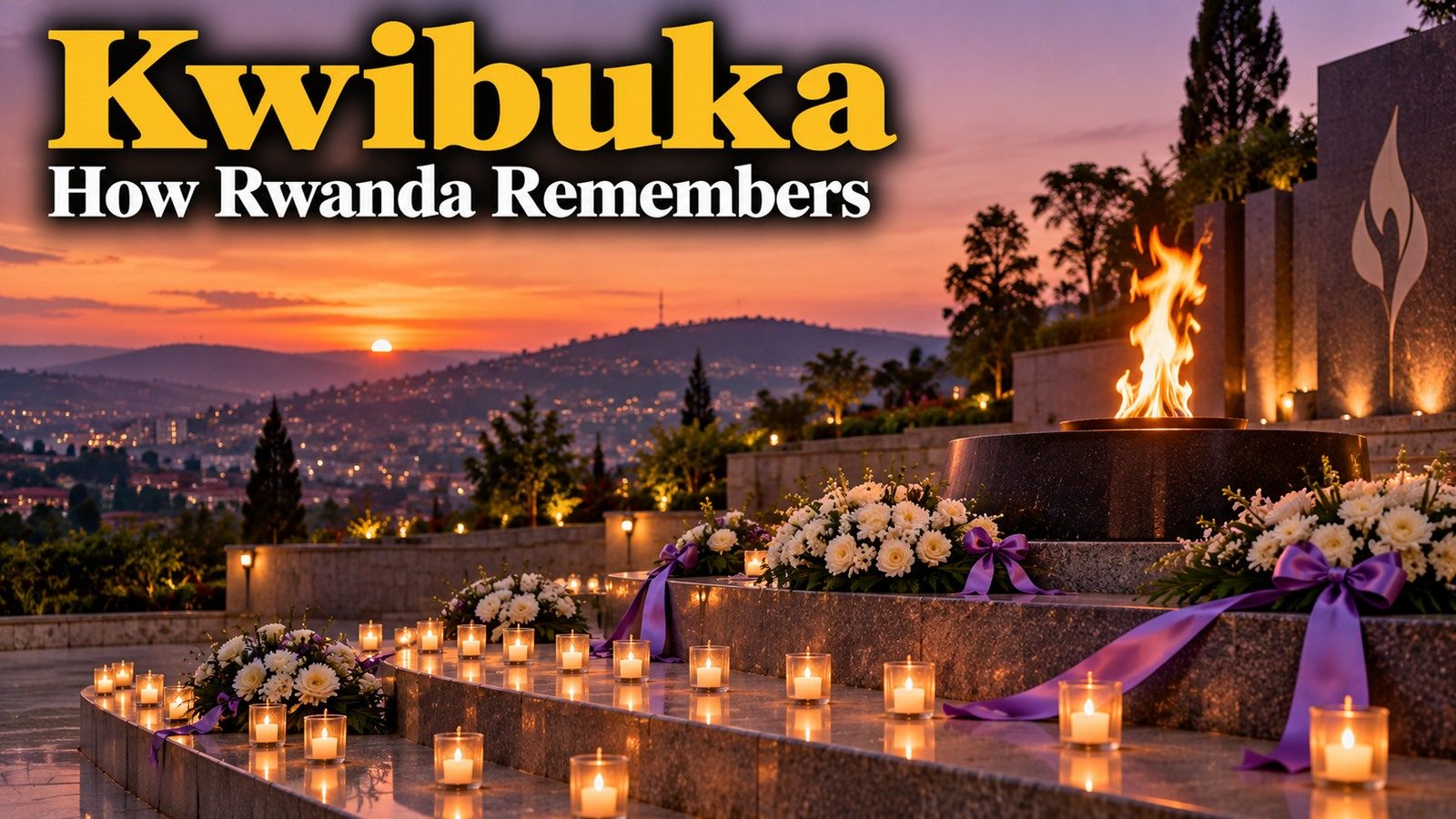
Today, 7 April, Rwanda begins its annual period of remembrance. Across the country, people gather at memorials, light candles, listen to survivors' testimonies and walk in silence. A flame is lit in Kigali, and it will burn for 100 days — the length of time, in 1994, that it took for an estimated 800,000 to more than one million people to be killed. The period of remembrance is called Kwibuka, a Kinyarwanda word meaning "to remember."
What happened
On the night of 6 April 1994, a plane carrying Rwanda's president was shot down over Kigali. Within hours, extremist forces began a planned campaign of mass killing directed against the Tutsi minority. Over the following 100 days, soldiers, militias and ordinary civilians, mobilised by hate propaganda on radio and in print, killed Tutsi men, women and children in their homes, churches, schools and on roadblocks across the country. Hutu and others who opposed the killing or tried to protect their neighbours were also murdered.
The genocide ended in July 1994, when the Rwandan Patriotic Front took control of the country. By then, Rwanda had lost a huge part of its population. Many survivors had lost entire families.
The international community, including the United Nations, largely failed to act to stop the killing — a failure that UN leaders have since acknowledged.
How Rwanda remembers
Kwibuka is both a national and a deeply personal time. Its observance includes:
- The lighting of the flame of remembrance at the Kigali Genocide Memorial, where more than 250,000 victims are buried.
- A week of national mourning at the start of the 100 days, with commemorative events in every community.
- Walks to Remember, silent processions held in Rwanda and by Rwandan communities around the world.
- Testimonies from survivors, shared publicly so that the truth is known and passed on.
- Burial of remains that are still being found, with dignity.
The commemoration period ends in early July, around Liberation Day on 4 July.
The United Nations marks 7 April as the International Day of Reflection on the 1994 Genocide against the Tutsi in Rwanda, first established by the General Assembly in 2003.
Justice and rebuilding
After the genocide, Rwanda faced a near-impossible task: rebuilding a society where survivors and perpetrators lived side by side. Alongside the International Criminal Tribunal for Rwanda, which tried leading organisers in Arusha, Tanzania, the country revived community courts called gacaca, which heard hundreds of thousands of cases in local settings, with confessions, testimony and reparations. The process was imperfect and debated, but it allowed many communities to confront what had happened.
Rwanda has since rebuilt its economy and institutions, and the memory of 1994 shapes national life deeply.
Why remembering matters
Kwibuka exists so that the victims are never forgotten, and so that the world understands how genocide happens: through years of dehumanising propaganda, the organisation of killers, and the silence of others. Remembering is also a commitment to prevention.
Many of Africa's commemorations — like South Africa's Human Rights Day, which honours the victims of Sharpeville — are about turning the memory of terrible events into a pledge for human dignity.
Why it matters
To remember is not only to look back. Kwibuka asks every generation to recognise the warning signs of hatred and to refuse indifference. On 7 April, Rwanda remembers. The rest of the world is invited to remember with it.