Freedom Day, 27 April 1994: The Day South Africa Voted Together
On 27 April 1994, millions of South Africans queued for hours to vote in the country's first democratic election. Today, the date is Freedom Day.
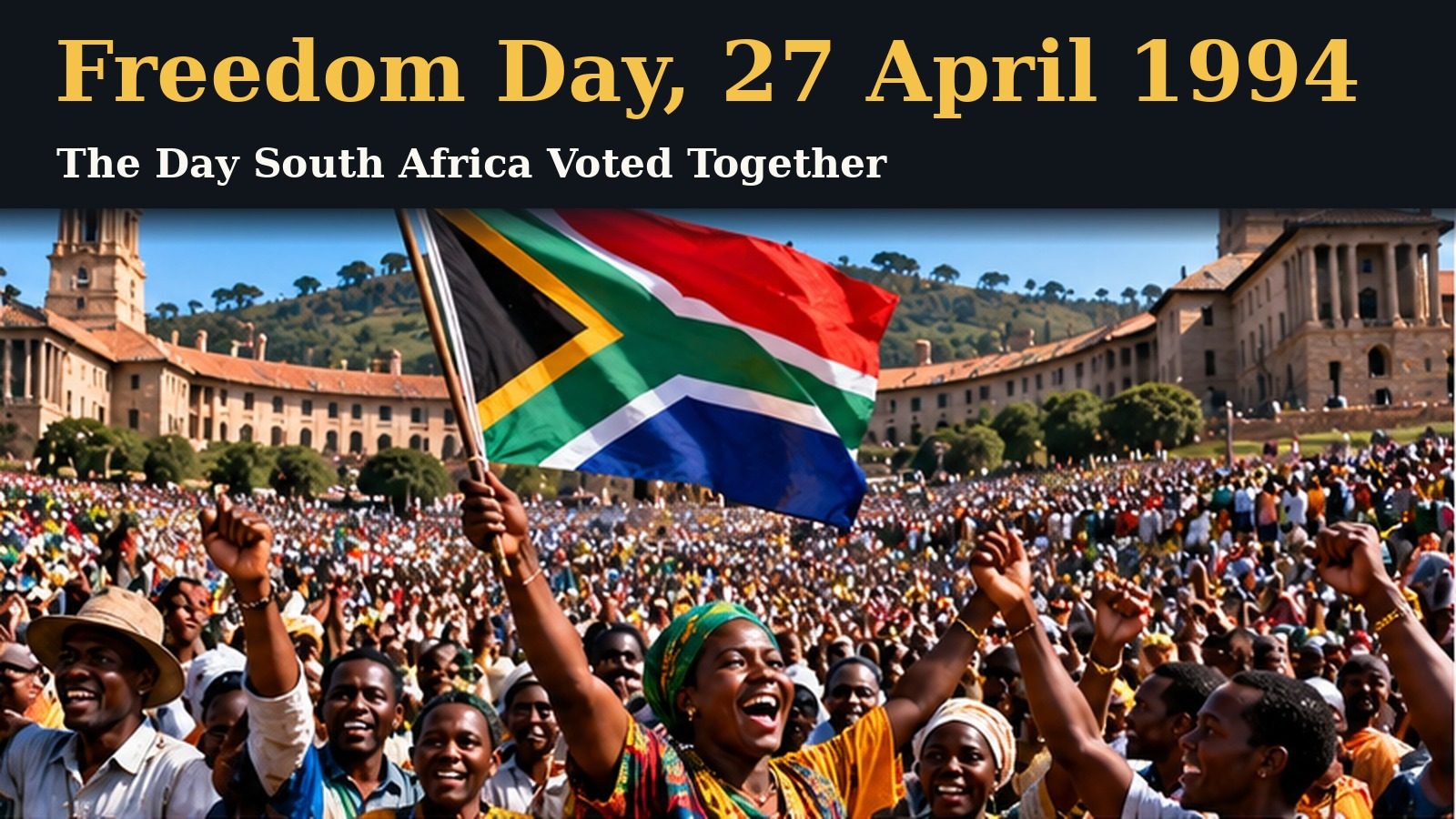
The queues began before dawn. In cities and villages across South Africa, people lined up outside schools, churches and community halls: elderly women who had walked for hours, young people, workers, farmers, people in wheelchairs, people who had waited their whole lives for this moment. Some queues stretched for kilometres; many people waited all day in the sun. On 27 April 1994, for the first time, South Africans of all races voted together. Every year, the date is celebrated as Freedom Day.
The end of apartheid
For nearly half a century, South Africa was ruled under apartheid, a system of racial segregation and white-minority rule that denied the vote, land and basic rights to the Black majority, as well as to Coloured and Indian South Africans. Resistance took many forms — protests, strikes, boycotts, armed struggle, and international sanctions — and came at a great cost, as at Sharpeville in 1960 and Soweto in 1976.
By the late 1980s, the system was in crisis. In February 1990, President F.W. de Klerk announced the unbanning of the ANC and other liberation movements, and Nelson Mandela walked free after 27 years in prison. Years of difficult negotiations followed, marked by violence that claimed thousands of lives. Eventually, the parties agreed on an interim constitution and a date for the first democratic election.
The vote
The election was held over several days, with 27 April as the main day of voting. Millions of people voted for the first time in their lives. Many described the experience as deeply emotional; some voters dressed in their best clothes, as if going to church. Despite fears of violence in the days before, the voting itself was largely peaceful.
The African National Congress (ANC) won about 63% of the vote. The National Party, which had ruled during apartheid, came second, and the Inkatha Freedom Party third. A Government of National Unity was formed, including several parties.
A new president
On 10 May 1994, Nelson Mandela was inaugurated as South Africa's first democratically elected president at the Union Buildings in Pretoria, with world leaders in attendance. In his speech, he spoke of building a society in which all South Africans, Black and white, could walk tall without fear — "a rainbow nation at peace with itself and the world."
Freedom Day
27 April became Freedom Day, a public holiday. Each year, the government holds official celebrations, and people reflect on the meaning of freedom. The day also invites questions: three decades on, South Africa still faces deep inequality, unemployment and poverty, and many argue that political freedom must be matched by economic justice. Those debates are themselves a sign of a living democracy.
Why it matters
The images of 27 April 1994 — the long, patient queues stretching across the land — remain among the most moving in modern history. They show what people will endure for the right to have a say in their own country. Freedom Day honours that patience, and the struggle and sacrifice that made it possible.
Further reading
- South African Government — Freedom Day
- Electoral Commission of South Africa (IEC) — 1994 election results
- Nelson Mandela, Long Walk to Freedom (Little, Brown, 1994)