Coupé-Décalé: Côte d'Ivoire's Party Music Born in Hard Times
Flashy clothes, dance crazes and banknotes thrown in the air: coupé-décalé began among young Ivorians in Paris and became the soundtrack of a country at war.
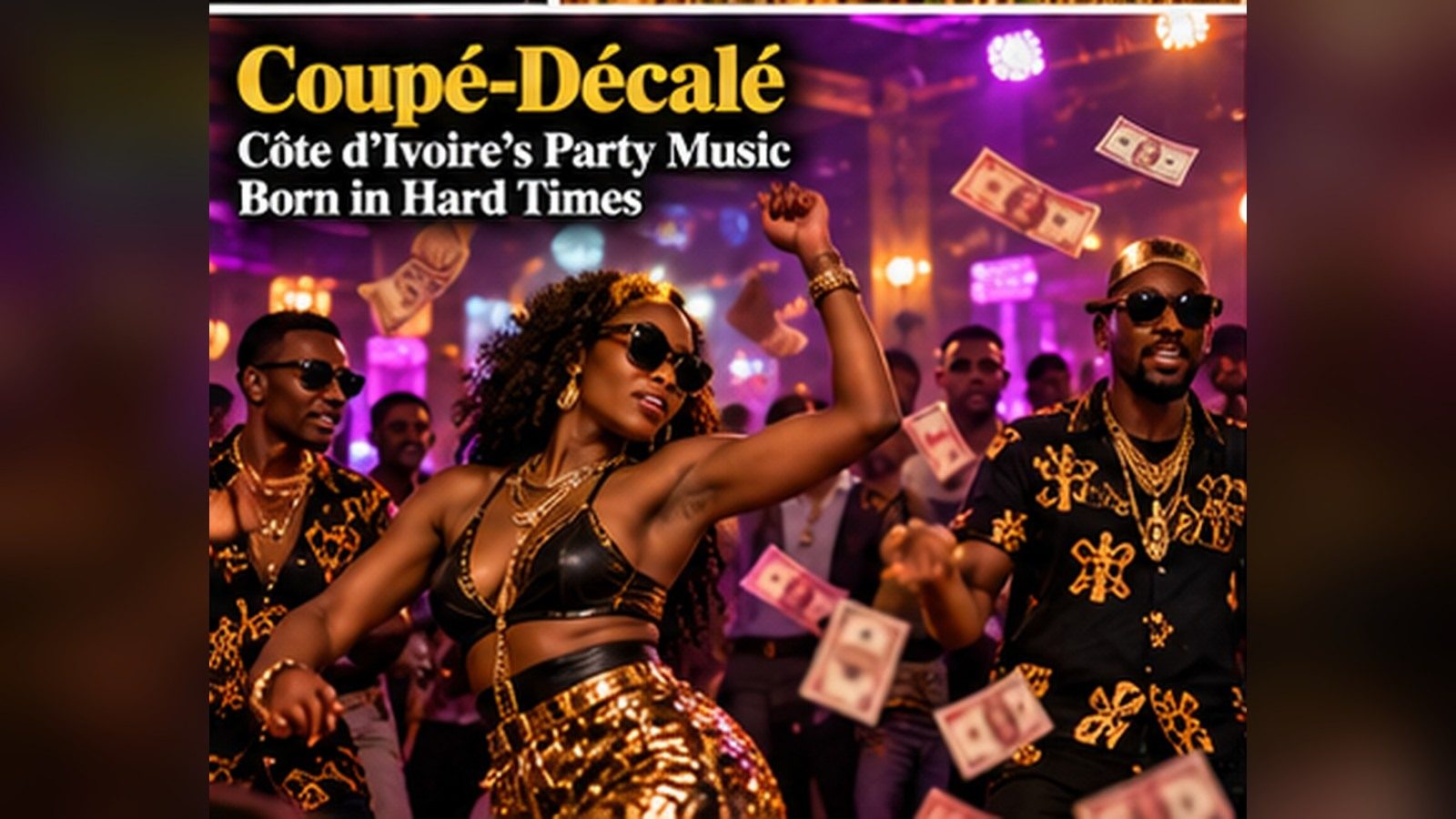
A crowded nightclub, a booming beat, and a group of young men in designer clothes and sunglasses on the dance floor. Suddenly, one of them pulls out a stack of banknotes and throws it into the air over the dancers. The crowd roars, the DJ shouts his name, and everyone tries a new dance step at once. This is the world of coupé-décalé, the dance music of Côte d'Ivoire — loud, flashy, and born, surprisingly, out of one of the country's darkest periods.
A strange name
Coupé-décalé comes from Nouchi, the street slang of Abidjan, which mixes French with Ivorian languages. It is usually explained as meaning something like "cheat and run off" or "cut and leave" — slang for getting what you can and then disappearing. The name was meant to sound cheeky, even shocking, and it worked.
Paris, early 2000s
Coupé-décalé began among young Ivorian migrants in Paris around the turn of the 2000s. A group of flamboyant young men who called themselves the Jet Set, led by Douk Saga (Stéphane Doukouré), became famous in the city's African nightclubs for their extravagant spending, designer fashion and showy behaviour. They were said to "spray" money on dancers and DJs in a style borrowed from older West and Central African traditions of honouring performers.
In 2002–2003, Douk Saga and the Jet Set released songs that launched the genre, with a fast, danceable beat built on electronic rhythms, Congolese-influenced guitar and the call-and-response shouts of a hype man.
A war, and a party
In September 2002, Côte d'Ivoire was plunged into a civil war that divided the country into a rebel-held north and a government-controlled south. The economy suffered, many people lost jobs, and fear was everywhere. Yet coupé-décalé, arriving from Paris at exactly that moment, exploded in popularity in Abidjan.
Many Ivorians explain the paradox simply: people needed to forget their troubles, if only for a night. The music offered a fantasy of wealth, glamour and fun at a time of hardship. Critics complained that it glorified money and superficiality. Fans saw it as resilience — a refusal to let war take away joy.
Dances and stars
Coupé-décalé is famous for dance crazes. New songs often come with new dance steps, which spread rapidly through clubs, streets, schools and, later, social media. The music features an atalaku — a hype man (a role borrowed from Congolese music) who shouts names, slogans and dance instructions over the beat.
After Douk Saga's death in 2006, a new generation of stars took over. DJ Arafat, nicknamed "Yorobo," became the genre's most popular figure, known for his energy, rivalries and huge fan base; his death in a motorcycle accident in 2019 brought enormous crowds into the streets of Abidjan. Artists such as Serge Beynaud, Debordo Leekunfa and others have carried the style across francophone Africa and beyond.
A pan-African sound
Coupé-décalé spread across West and Central Africa and influenced Nigerian, Ghanaian and Cameroonian pop. Its love of style and display recalls other African cultures of elegance, such as the sapeurs of Congo, and its guitar lines owe a debt to Congolese music.
Why it matters
Coupé-décalé is not just party music. It is a reminder of how people use music to survive difficult times — by dancing, dressing up, and imagining a better life. In a country torn by war, a group of young men in Paris gave Côte d'Ivoire a reason to dance, and the dance has not stopped since.