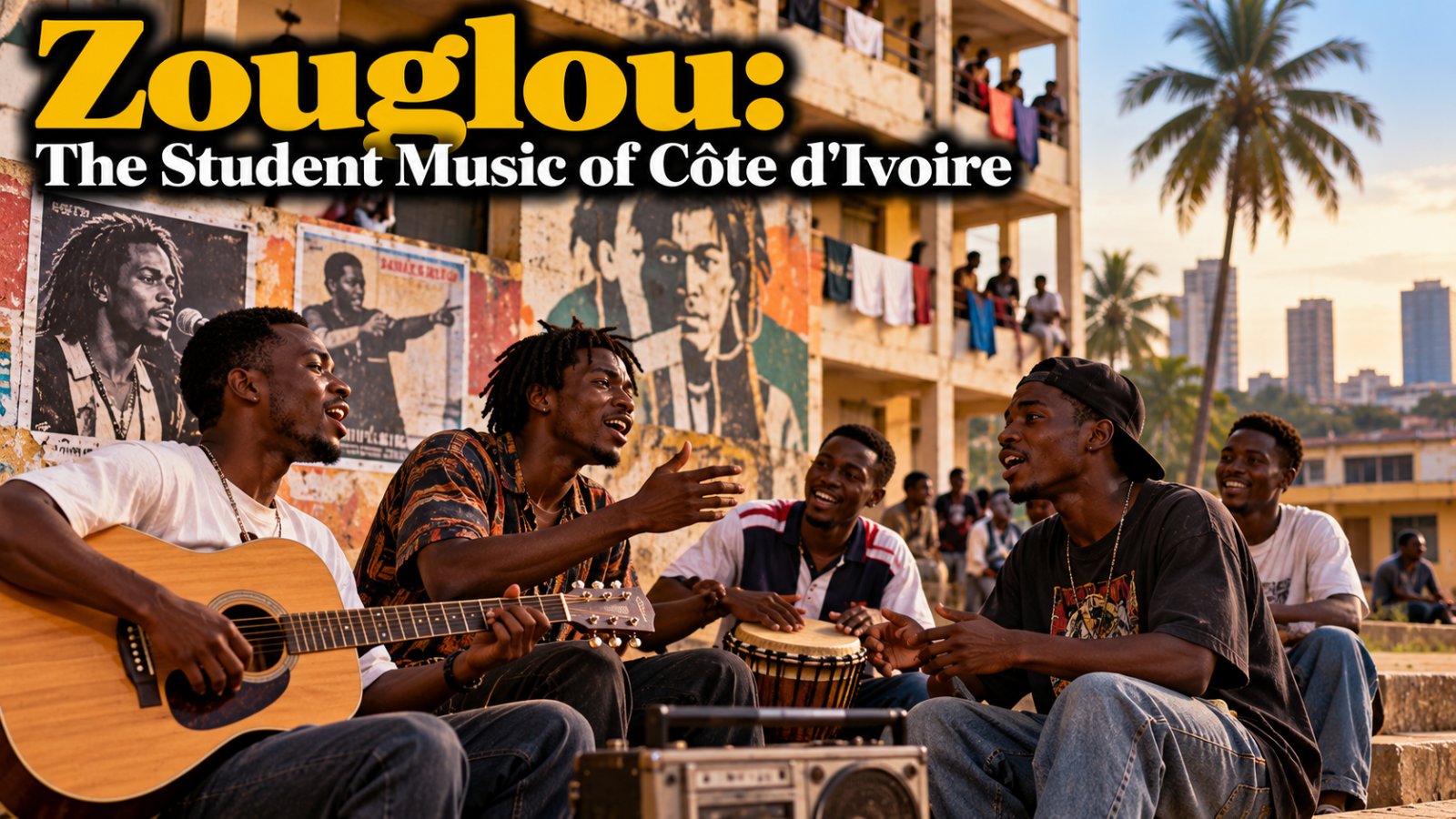
Bongo Flava: How Tanzania Made Hip Hop Its Own
In the 1990s, young Tanzanians began rapping and singing in Kiswahili over hip hop and R&B beats. The result, bongo flava, became East Africa's biggest pop sound.
Turn on the radio in Dar es Salaam, walk past a shop in Nairobi, or ride a minibus in Kampala, and you are likely to hear it: smooth melodies, catchy hooks, and lyrics in Kiswahili about love, money, struggle and success, over beats influenced by hip hop, R&B, reggae and Afropop. This is bongo flava, the popular music of Tanzania — and one of the most successful music scenes in Africa.
What's in the name?
Bongo comes from the Kiswahili word ubongo, meaning "brain." In Tanzanian slang, "Bongo" became a nickname for Dar es Salaam, and sometimes for Tanzania as a whole — a place where you need your brains to survive. "Flava" is "flavour," borrowed from American slang. So bongo flava is "the flavour of Bongo": Tanzanian music with its own taste.
From American hip hop to Kiswahili rap
In the late 1980s and early 1990s, Tanzania was opening up after decades of socialist economic policies under Julius Nyerere's ujamaa. Imported cassettes, radio stations and later television brought American hip hop and R&B to young people in Dar es Salaam.
At first, young artists rapped in English, copying their American heroes. But a turning point came when they began rapping in Kiswahili — a language spoken across Tanzania and East Africa, as described in our story on Kiswahili. Kiswahili made the music accessible to everyone and allowed artists to speak directly about local life.
Early pioneers included groups and rappers such as Kwanza Unit, Mr. II (Sugu) and Professor Jay, who often addressed social and political issues: poverty, corruption, AIDS and unemployment. The arrival of private radio stations in the 1990s helped spread the music.
Bongo flava takes over
From the late 1990s and 2000s, bongo flava grew into a broad pop genre, mixing rap with singing, R&B, reggae, dancehall, taarab and local rhythms. Stars such as Lady Jaydee, Juma Nature, AY, Mwana FA and Ali Kiba became household names.
In the 2010s, Diamond Platnumz emerged as one of the biggest stars in Africa. His record label, WCB Wasafi, produced stars such as Harmonize, Rayvanny and Zuchu, and he collaborated with major Nigerian and international artists. Bongo flava videos gained hundreds of millions of views online, and artists toured across Africa, Europe and the Americas.
Themes and style
Bongo flava songs are known for:
- Kiswahili lyrics, often mixed with English and street slang.
- Love songs and romantic ballads.
- Dance tracks with catchy choreography.
- Social commentary — about money, inequality, politics and daily life.
- Fashion and lifestyle — music videos showcasing style, cars and success.
Rivals and relatives
Bongo flava sits alongside other Tanzanian styles, such as taarab, the traditional sung poetry of the coast, and singeli, a fast, frenetic electronic dance music from Dar es Salaam's streets. Kenya and Uganda have their own scenes, and the three countries' artists often collaborate.
Why it matters
Bongo flava shows how African youth can take a global music like hip hop and make it completely their own, in their own language. It gave a generation of Tanzanians a voice, created a thriving music industry, and made Kiswahili one of the languages of global pop. When a bongo flava hit plays from Dar es Salaam to Dubai, it carries the flavour of Bongo with it.
Further reading
- Alex Perullo, Live from Dar es Salaam: Popular Music and Tanzania's Music Economy (Indiana University Press, 2011)
- Kelly Askew, Performing the Nation: Swahili Music and Cultural Politics in Tanzania (University of Chicago Press, 2002)
- Music In Africa — Tanzania overview