Africa Day: How 25 May 1963 Became a Celebration of a Continent
Yesterday, Africans around the world marked Africa Day, the anniversary of the founding of the Organisation of African Unity in Addis Ababa. Here is the story behind it.
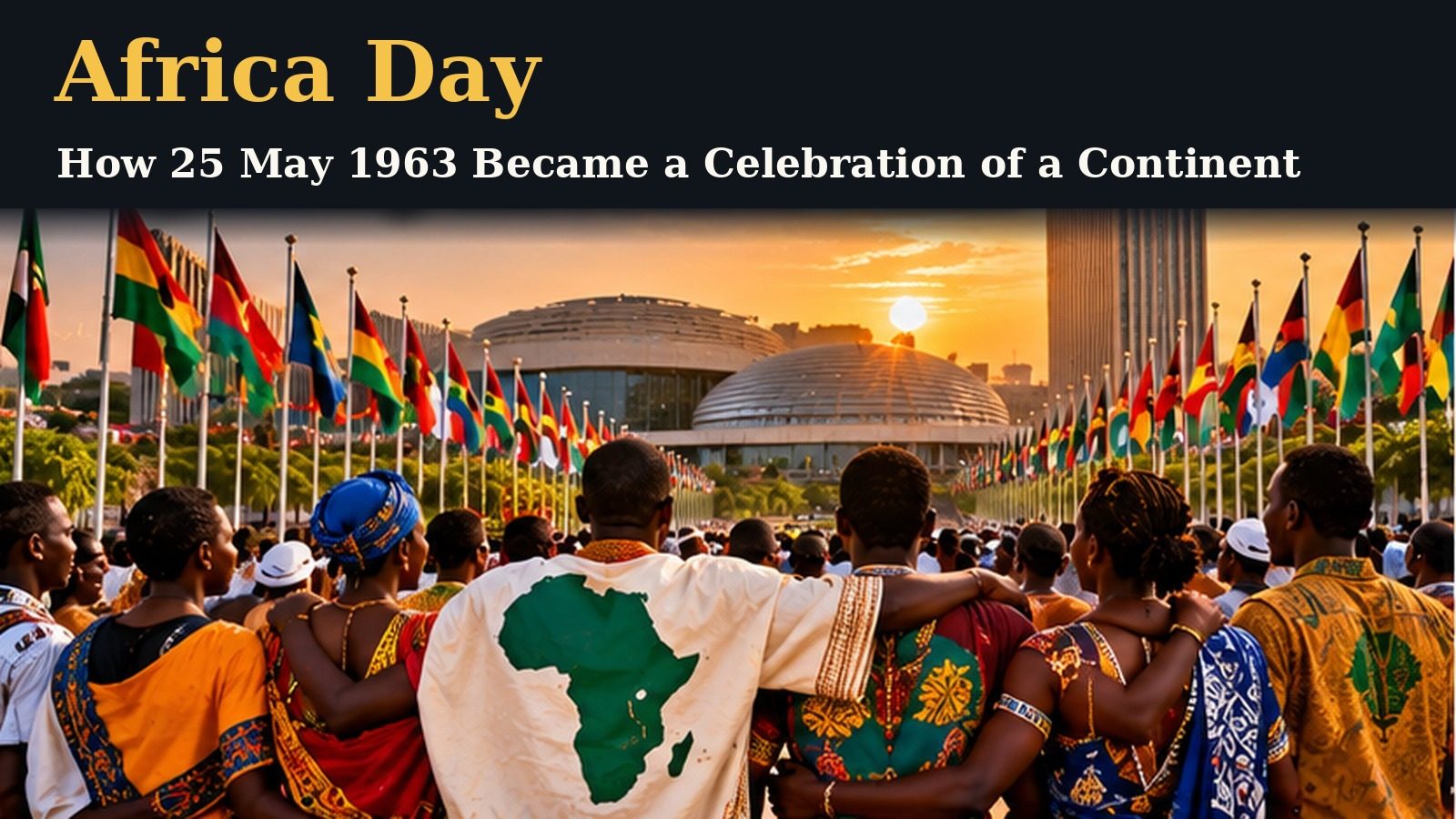
Yesterday, 25 May, was Africa Day. In cities across the continent and the diaspora, people held concerts, lectures, flag ceremonies, fashion shows and food festivals. Embassies hosted receptions; schools taught lessons on African history; social media filled with photos of traditional dress. The day marks a moment in 1963, when leaders of independent African states met in Addis Ababa and signed the charter of the Organisation of African Unity.
A continent becoming free
By the early 1960s, Africa was transforming. Ghana had become independent in 1957, and in 1960 alone — often called the "Year of Africa" — seventeen African countries won independence. Yet much of the continent was still under colonial rule, including Angola, Mozambique, Guinea-Bissau, Namibia and Zimbabwe, and South Africa was ruled by an apartheid government.
The newly independent states disagreed about how to unite. One group, led by Ghana's Kwame Nkrumah, wanted rapid political union — a United States of Africa, building on the ideas we explored in our story on Pan-Africanism. Others preferred cooperation between independent nations, with each keeping its sovereignty and colonial-era borders.
Addis Ababa, May 1963
In May 1963, Emperor Haile Selassie of Ethiopia hosted a summit of 32 independent African states in Addis Ababa. After intense debate, on 25 May, they signed the Charter of the Organisation of African Unity (OAU). The compromise favoured cooperation rather than full union, but it was still a historic moment: for the first time, Africa's independent nations had their own continental organisation.
The OAU's main goals were to:
- Promote unity and solidarity among African states.
- Defend their sovereignty and territorial integrity.
- Eradicate all forms of colonialism from Africa.
- Encourage international cooperation.
The OAU's record
The OAU's greatest achievement was its support for the liberation struggles in southern Africa. Through its Liberation Committee, based in Dar es Salaam, it provided support to movements fighting colonial rule and apartheid in Angola, Mozambique, Zimbabwe, Namibia and South Africa.
But the organisation also faced criticism. Its principle of non-interference in member states' internal affairs meant it often stayed silent while governments abused their people, staged coups, or fought wars. Critics called it a "club of heads of state."
From OAU to African Union
In 2002, the OAU was replaced by the African Union (AU), launched in Durban, South Africa, with its headquarters in Addis Ababa. The AU was given a stronger mandate, including the right to intervene in member states in cases of genocide, war crimes and crimes against humanity, and new institutions such as the Pan-African Parliament and the African Court on Human and Peoples' Rights. All 55 African states are members.
The AU's long-term plan, Agenda 2063, sets out a vision of an integrated, prosperous and peaceful Africa, including projects such as the African Continental Free Trade Area and a continental passport.
How Africa Day is celebrated
Africa Day is a public holiday in some countries, including Ghana, Mali, Zambia and Zimbabwe, and is widely marked elsewhere. Celebrations focus on:
- Unity — the shared history and future of African peoples.
- Culture — music, dance, fashion and food from across the continent.
- Reflection — on progress, challenges, and what independence has meant.
African diaspora communities in Europe, the Americas and Asia also hold events, and many people wear traditional clothing or national colours.
Why it matters
Africa Day is a reminder of a remarkable moment: newly free nations, many only a few years old, coming together to declare that the continent would decide its own future. More than sixty years later, the questions they debated — about unity, freedom and the role of the state — are still being answered. The day invites every African, and every friend of Africa, to celebrate how far the continent has come and to imagine how far it can go.
Further reading
- African Union — About the African Union
- Kwame Nkrumah, Africa Must Unite (Heinemann, 1963)
- Klaas van Walraven, Dreams of Power: The Role of the Organization of African Unity in the Politics of Africa 1963–1993 (Ashgate, 1999)